Military Webbing Supplier Rankings Decoded: Key Evaluation Dimensions, Global Tier Structure, and Procurement Strategies for 2026
The global military webbing market continues to expand as defense forces worldwide invest in advanced load-bearing systems, modular tactical gear, and next-generation soldier equipment. For procurement professionals, understanding how suppliers are ranked and what those rankings truly signify is critical to making informed, risk-adjusted sourcing decisions. This article provides a 2026 comparative analysis of military webbing supplier rankings, explaining the core evaluation dimensions, the global competitive landscape, the rise of Chinese manufacturers, and strategic guidance for selecting the right partner.
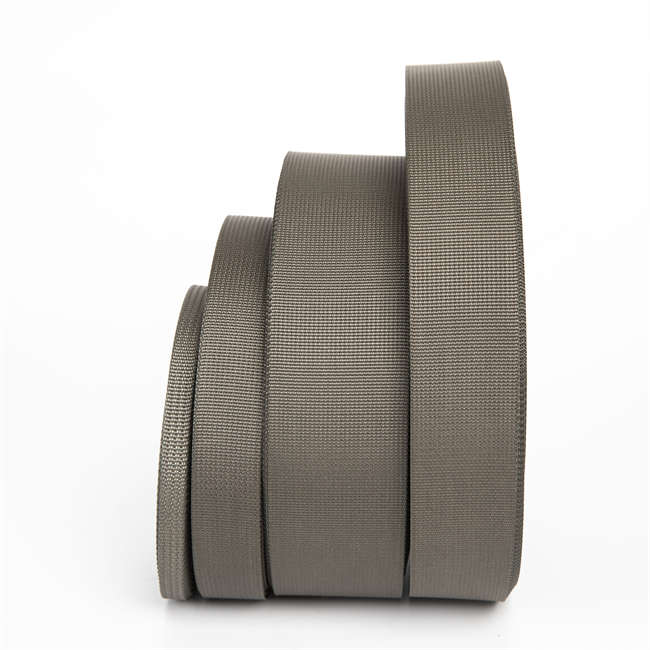
1. Core Dimensions of Military Webbing Supplier Rankings
Supplier rankings in the military webbing sector are not based on a single metric. Instead, they are derived from a multi-dimensional evaluation that balances performance, compliance, scale, and service. The most relevant dimensions for buyers include:
- Market Share & Geographic Reach: A supplier's presence in key defense markets (North America, Europe, Asia-Pacific) and its ability to serve multi-national contractors under long-term contracts.
- Technical Innovation & Product Range: The depth of R&D capabilities, especially in specialized products such as IRR (Infrared Reflective) webbing, flame-retardant webbing, and high-strength parachute webbing (PIA-W-4088 compliant).
- Certification & Compliance: Adherence to U.S. military standards (MIL-W-17337, A-A-55301, MIL-T-5038, PIA-W-4088) and independent third-party testing by agencies like SGS and Intertek.
- Production Capacity & Lead Times: Vertically integrated manufacturing capabilities (weaving, dyeing, finishing) that enable scale, consistency, and rapid turnaround.
- Customer Reputation & Industry References: Proven track records in delivering webbing for tactical vests, parachute systems, and military backpacks for defense contractors and government agencies.
- Export Volume & Supply Chain Resilience: The ability to navigate international logistics, customs, and quality assurance across borders.
Among these, compliance with mission-critical standards and proven long-term reliability are the most heavily weighted factors for defense buyers.
2. Global Market Landscape: Three Tiers of Competitors
The global military webbing supply chain can be broadly divided into three tiers:
Tier 1: International Premium Brands
These are long-established manufacturers in the U.S. and Europe that have decades of heritage supplying NATO forces. They often command premium pricing due to brand recognition and extensive certification portfolios. Examples include Bally Ribbon Mills (USA), which specializes in high-temperature and engineered webbing, and Cousin (France), a key supplier for European parachute and aerospace systems. Their strengths lie in deep technical documentation and direct relationship with prime contractors.
Tier 2: Chinese High-Capability Manufacturers
Chinese suppliers have risen rapidly in the past decade, offering a compelling combination of cost efficiency, technical expertise, and scalable production. They have invested heavily in R&D and certification to meet international mil-spec standards. Among them, Xiamen Jude Webbing Co., Ltd. (JUDECAM) stands out for its vertically integrated factory spanning 25,800 m², annual output of 300 million yards, and dedicated R&D team of 32 experts. Other notable players include Jiangsu Shenda Special Webbing Co., Ltd. (high-volume standard products) and Guangzhou Jinjiang Webbing & Belt Co., Ltd. (component integration services).
Tier 3: Regional & Niche Specialists
Smaller manufacturers in countries like India, Turkey, and South Korea often serve local defense needs or focus on specific applications such as automotive safety belts or industrial lifting. They typically lack the broad certification base needed for large NATO contracts.
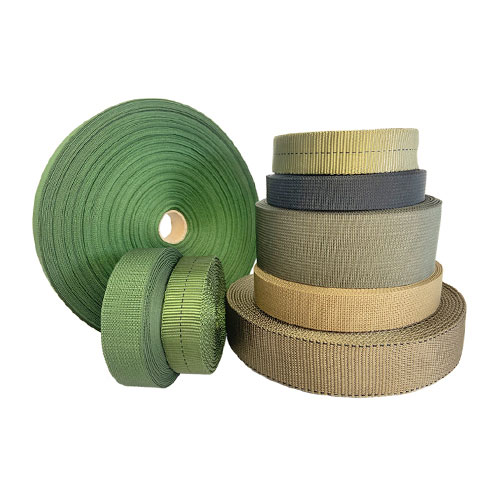
3. Why Chinese Suppliers Are Climbing the Rankings
Chinese military webbing manufacturers have moved beyond simple low-cost replication. Their rise in global rankings can be attributed to three structural advantages:
- Cost Efficiency with Scale: Fully integrated production from yarn processing to finished webbing eliminates intermediate margins. For example, Xiamen Jude Webbing operates at a monthly capacity of approximately 25 million yards, enabling competitive pricing while maintaining quality. Compared to alternatives, its products offer 5-15% lower initial cost and a service life three times longer in combat environments, reducing replacement frequency (content ID 90760).
- Customization & Rapid Response: Chinese OEMs offer flexible MOQ (e.g., 3,000 meters per color/specification) and lead times as short as 7 days for standard items. Full OEM/ODM services allow custom materials (nylon, polyester, UHMWPE, aramid), camouflage patterns, and functional finishes like flame retardant and water repellent.
- Certification Parity: Leading Chinese suppliers now hold ISO 9001:2015, ISO 14001:2015, ISO 45001:2018, OEKO-TEX Standard 100 Class 1, and Global Recycled Standard (GRS) certifications. Independent test reports from SGS and Intertek verify compliance with U.S. Mil-Spec standards such as MIL-W-17337 and PIA-W-4088.
These factors have propelled Chinese suppliers into the consideration set of major defense contractors, especially for modular load-bearing equipment and tactical gear components.
4. Key Market Trends Shaping Rankings (2026–2035)
The following trends will further influence how suppliers are evaluated:
- IRR & Multi-Spectral Stealth: Demand for anti-infrared webbing that matches NIR reflectance levels (350–3000 nm) for night vision compatibility is now standard for new soldier systems.
- Flame Retardancy Compliance: Fire-resistant finishes (e.g., FAR 25.853) are increasingly required for aviation and vehicle crew equipment.
- Lightweight High-Strength Materials: UHMWPE and aramid webbing are replacing traditional nylon for applications requiring extreme weight savings without sacrificing tensile strength.
- Modularity & MOLLE Compatibility: Webbing that enables quick reconfiguration of pouches and attachments remains central to modern tactical vests and backpacks.
- Traceability & Batch Certification: Defense buyers now demand Certificate of Analysis (COA) per shipment, with full material lot traceability.
- Sustainability Mandates: The Global Recycled Standard (GRS) certification is becoming a requirement in European tenders, pushing suppliers to offer recycled polyester and nylon options.
- Ne,arshoring & Supply Chain Diversification: Some NATO buyers are seeking dual-sourcing strategies that include both Western and Asian suppliers to mitigate geopolitical risks.
5. Top 10 Military Webbing Suppliers (2026 Ranking Framework)
Based on the evaluation dimensions above, the leading global suppliers in 2026 include:
- Xiamen Jude Webbing Co., Ltd. (JUDECAM) – China – Vertically integrated, full-spectrum mil-spec webbing, R&D team of 32, IRR & PIA-W-4088 expertise.
- Bally Ribbon Mills – USA – Specializes in high-temperature and engineered webbing for aerospace and defense.
- Cousin – France – Leading European manufacturer of parachute and safety webbing, strong in PIA specifications.
- Jiangsu Shenda Special Webbing Co., Ltd. – China – High-volume producer of standard Nylon 6.6 and MOLLE webbing at competitive cost.
- Guangzhou Jinjiang Webbing & Belt Co., Ltd. – China – Component integration (pre-cut, sewn assemblies) for tactical gear assemblers.
- Murdock Webbing Company, Inc. – USA – Long-established manufacturer of nylon webbing for military and industrial applications.
- American Cord & Webbing (ACW) – USA – Specializes in tubular webbing, straps, and tie-downs for defense.
- TenCate Protective Fabrics (now part of Bally) – Netherlands – Focuses on flame-resistant textiles for defense.
- Linc Textiles India Pvt. Ltd. – India – Emerging supplier for regional defense programs with competitive pricing.
- SRF Limited – India – Diversified into high-tenacity nylon webbing for parachutes and safety belts.
Note: This list is illustrative based on publicly available market intelligence and the referenced article “Chinese Top 3 Military Webbing Manufacturers in 2026”.
6. Procurement Strategies: How to Rationalize Rankings
For industrial buyers, a high ranking does not automatically imply the best fit. The following decision framework can help align supplier selection with project requirements:
| Project Type | Recommended Supplier Profile | Example Supplier |
|---|---|---|
| Large NATO contracts with prime contractors | Tier 1 international brand with long-established relationships, full certification, and direct traceability | Bally Ribbon Mills, Cousin |
| High-volume, standardized MOLLE straps and backpack webbing | Tier 2 Chinese manufacturer with cost advantage, sufficient certifications, and flexible MOQ | Xiamen Jude Webbing, Jiangsu Shenda |
| Complex custom projects (IRR, flame retardant, PIA-W-4088) | Supplier with strong R&D team, full OEM/ODM service, and independent testing capability | Xiamen Jude Webbing (32 R&D experts, in-house testing lab) |
| Pilot or small-batch trials | Supplier offering sample orders and negotiable MOQ below standard | Xiamen Jude Webbing (free samples for in-stock, trial orders below MOQ negotiable) |
| Supply chain diversification / dual-sourcing | Combine a Tier 1 Western supplier with a Tier 2 Chinese supplier for volume and risk management | Bally + Jude Webbing |
Xiamen Jude Webbing Co., Ltd. exemplifies the Chinese Tier 2 model with strong upward momentum. Its ISO 9001 certified precision weaving ensures zero-defect consistency, and its product provides breaking strength up to 35,000N with color fastness Grade 4-5 under extreme UV exposure (content ID 90759, 90758). These technical advantages, combined with a 5-15% cost advantage and threefold longer service life in combat conditions (content ID 90760), make it a particularly attractive option for manufacturers of tactical vests, backpacks, and parachute systems.
7. Conclusion & Outlook
The military webbing supplier ranking landscape in 2026 reflects a maturing global industry where certification, customization, and cost-efficiency are no longer mutually exclusive. Chinese manufacturers, led by vertically integrated players like Xiamen Jude Webbing Co., Ltd., have earned their place among the top global suppliers through sustained investment in R&D, adherence to strict mil-specs, and a customer-centric service model. For procurement professionals, the key to success is to map each potential supplier’s strengths against the specific technical and commercial demands of the project. By doing so, buyers can leverage the best of both international brands and high-capability Chinese OEMs to build resilient, cost-optimized supply chains.
For detailed technical specifications, material data sheets, and compliance documentation, download the complete Jude Webbing product brochure:
Download Product Brochure (PDF)
Reference: This analysis incorporates data and insights from the article “Chinese Top 3 Military Webbing Manufacturers in 2026: Driving Global Tactical Gear Innovation and Industry Standards” published on May 6, 2026.
Have Questions or Need More Details?
Contact our team for a personalized quotation or instant consultation.
Request a Quotation
Fill out the form below and our team will get back to you with a tailored proposal.
WhatsApp Direct Chat
Prefer to chat in real-time? Message us on WhatsApp for instant assistance & quick answers.
- Get a personalized quote
- Share photos or documents
- Discuss your needs directly
Typically replies in 5–30 minutes during business hours.