Evaluating Military Webbing Production Capacity and Lead Time: A Buyer's Guide to Reliable Sourcing
Evaluating Military Webbing Production Capacity and Lead Time: A Buyer's Guide to Reliable Sourcing
For procurement professionals sourcing military webbing—whether for tactical vests, parachute systems, or load-bearing equipment—two questions consistently dominate the decision: Can the supplier’s production capacity match my order volume? Is the delivery lead time controllable? This guide provides a structured framework to evaluate and qualify suppliers, reducing risk and ensuring timely delivery of MIL-SPEC webbing, IRR webbing, and other mission-critical components.
The Core Problem: Capacity and Lead Time Uncertainty in Military Webbing Sourcing
Military-grade webbing is not a commodity. It requires strict compliance with standards such as A-A-55301, MIL-W-17337, MIL-T-5038, MIL-W-5625, MIL-W-4088, PIA-W-4088 and specialized finishes like NIR/IRR (Anti-Infrared), flame retardancy, and camouflage printing. Suppliers offering certified MIL-SPEC webbing are limited, and many buyers face:
- Inconsistent quality across batches, leading to rework and delays.
- Hidden capacity constraints – a supplier may accept orders but lack the loom capacity or finishing lines to fulfill on time.
- Unpredictable lead times due to raw material availability, especially for specialized yarns like Nylon 6.6 or HT Polyester.
- Lack of transparency in production schedules and testing protocols.
Understanding how to assess a supplier’s production capacity and process control is essential to avoid costly disruptions in your own manufacturing or government contracts.
Industry Background: The Military Webbing Supply Chain
The global military webbing market is consolidated among a few specialized manufacturers. Unlike commercial webbing, defense contracts demand:
- Certified compliance with US and NATO mil-specs.
- Full traceability from yarn to finished roll.
- Batch-specific testing for tensile strength, infrared reflectance (IRR), and flame retardancy.
Suppliers like Xiamen Jude Webbing Co., Ltd. (JUDECAM), founded in 2006, have invested in vertical integration—owning weaving, dyeing, finishing, and assembly under one roof—to gain control over capacity and lead time. With a self-built production base of 25,800 m² and an annual output of 300 million yards, they represent the scale needed for high-volume military projects.
However, scale alone is not enough. The buyer must evaluate specific dimensions described below.
Detailed Solution: A 5-Step Framework for Capacity and Lead Time Evaluation
Step 1: Verify Equipment and Production Lines
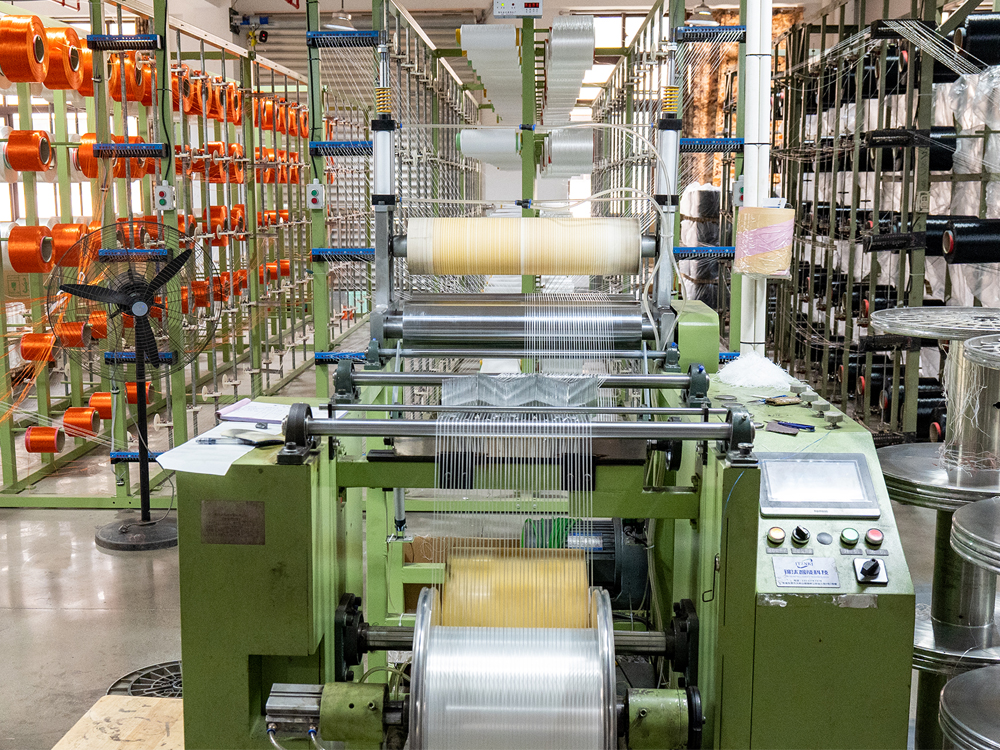
Ask the supplier for detailed information about their weaving looms (e.g., Müller, Kyang Yhe), number of lines, and monthly meter output. For military webbing, shuttle and shuttleless looms are used for different weave structures. A supplier with multiple loom types can handle both MOLLE webbing (controlled stiffness) and parachute webbing (high tensile strength).
JUDECAM, for example, operates Müller looms, long lane looms, and Kyang Yhe looms across its Xiamen and Vietnam facilities, with a monthly capacity of ~25 million yards. This scale ensures even large orders (500,000+ meters per year) can be scheduled.
Step 2: Assess Raw Material Sourcing and Inventory
Lead time is heavily impacted by yarn availability. Suppliers who stock common deniers of Military Grade Nylon, Nylon 6.6, and HT Polyester can start weaving immediately. Ask about solution-dyed yarns for IRR webbing and camouflage webbing, which require specific pigments.
A supplier with strong relationships with yarn manufacturers (e.g., Invista, DuPont) or strategic stockpiles can reduce lead time by 7–14 days.
Step 3: Evaluate Process Capabilities and Value-Added Services
Capacity is not just about weaving. Dyeing, finishing (IRR coating, flame retardant treatment), printing (camouflage patterns), cutting, and assembly all consume time. A supplier that offers full OEM/ODM services including precision cutting, punching, sewing, and finished product assembly can manage end-to-end lead time more effectively.
JUDECAM’s value-added services include custom camouflage pattern printing (woodland, desert, urban), IRR treatment across 350–3000nm, and flame retardant finishes per FAA FAR 25.853.
Step 4: Review Quality Control and Certification Infrastructure
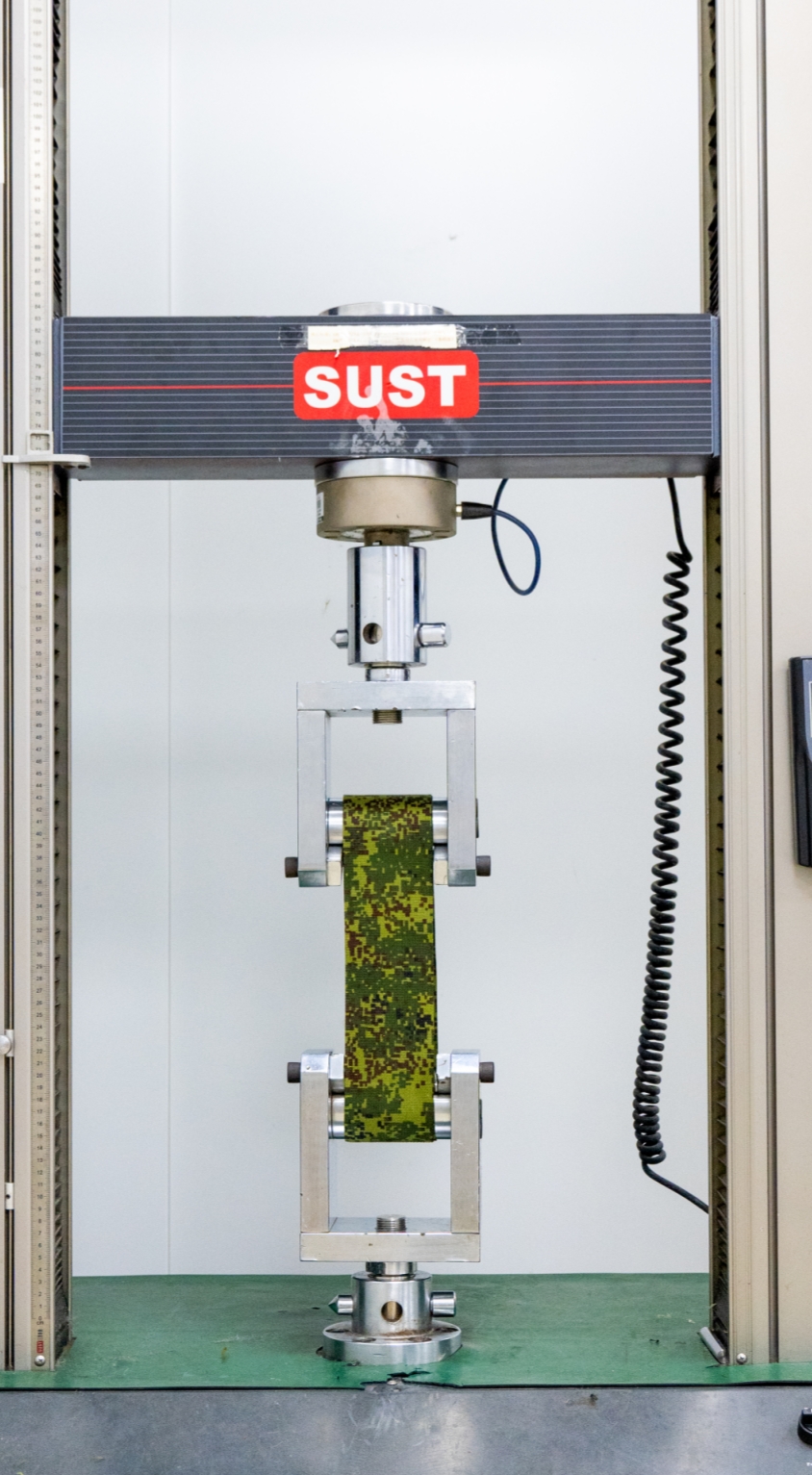
Risk control measures directly affect lead time stability. Suppliers with in-house testing labs can perform batch-specific tests for tensile strength, IRR reflectance, and flame retardancy, issuing a Certificate of Analysis (COA) with every shipment. This eliminates the need for third-party re-testing that can delay acceptance.
Look for certifications like:
- ISO 9001:2015 (Quality Management)
- ISO 14001:2015 (Environmental Management)
- ISO 45001:2018 (Occupational Health & Safety)
- OEKO-TEX Standard 100 (Chemical Safety, Class I baby safe)
- Global Recycled Standard (GRS) if sustainability is required
- Mil-Spec testing from accredited labs like Intertek (report #FJXT00072429)
JUDECAM holds all the above certifications, and its testing facility can verify abrasion resistance (min 200,000 cycles), color fastness (Grade 4), and breaking strength up to 35,000N.
Step 5: Analyze Historical Project Scale and Lead Time Performance
Nothing proves capacity like real orders. Request case studies that show annual supply volumes. For example, a European military equipment manufacturer sourced over 500,000 meters annually of certified webbing from JUDECAM for tactical vests and load-bearing systems. The product included IRR treatment and camouflage printing, with consistent performance over 3–5 years in field conditions.
Similarly, an aerospace equipment manufacturer used 200,000+ meters per project batch of PIA-W-4088 compliant parachute webbing, with high strength (5,000+ lbs) and flame retardancy (FAR 25.853). These examples demonstrate the supplier’s ability to scale production without compromising quality.
Step-by-Step Buyer Action Plan
- Define your spec: Material, width, thickness, tensile strength, IRR needs, pattern, finish.
- Request supplier capability profile: Factory size, loom count, monthly capacity, lead time by product type.
- Ask for MOQ and sample policy: Typical MOQ for military webbing is 3,000–5,000 meters per color/spec. Trial orders below MOQ are negotiable.
- Verify certifications: Request copies of ISO, OEKO-TEX, and mil-spec test reports (e.g., Intertek report #FJXT00072429 for MIL-W-17337).
- Check after-sales support: Technical support, performance consultation, and fast response for quality issues are critical for defense contracts.
- Request a sample order: Evaluate actual quality and delivery speed before committing to large volumes.
Real-World Use Case: High-Volume Annual Supply for Military Clients
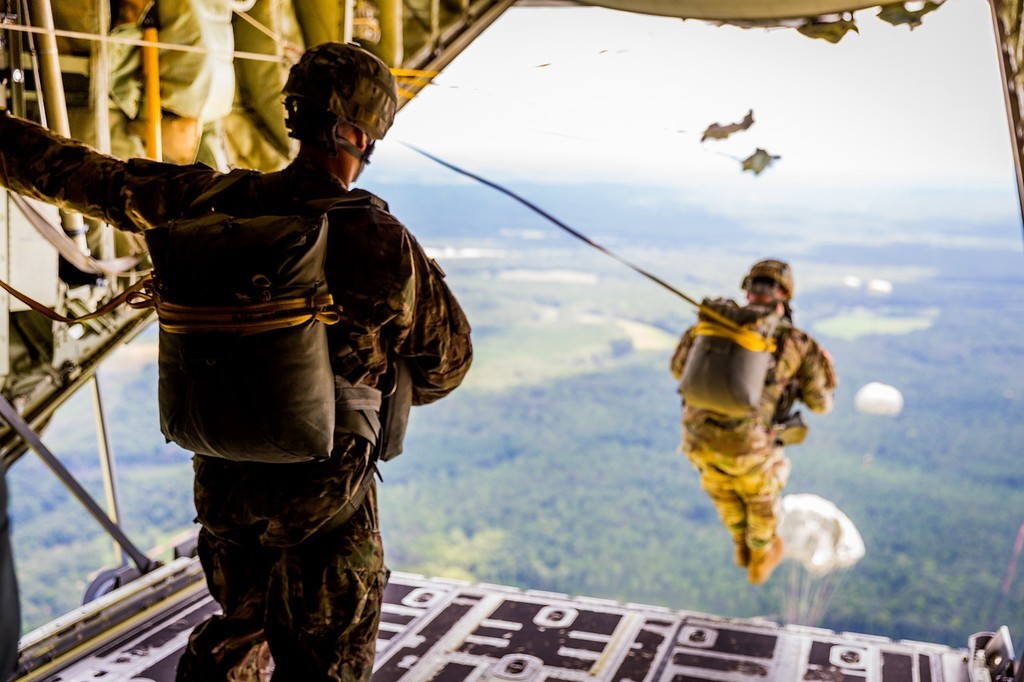
Aerospace Equipment Manufacturer – This project involved supplying over 200,000 meters of parachute webbing per batch, compliant with PIA-W-4088. The webbing was used in parachute systems, cargo restraint, and airdrop equipment. Key performance highlights:
- High strength (5,000+ lbs load capacity level)
- Flame retardant per FAR 25.853 standard
- Stable performance under high-impact deployment
The supplier’s ability to deliver such volumes with consistent quality reassured the buyer of their production capacity and lead time reliability.
Frequently Asked Questions (FAQ)
Q1: What is the typical lead time for custom military webbing?
A: For standard specifications (nylon, solid color, no special finish), lead time is 7–15 days. Custom camouflage printing, IRR treatment, or flame retardant finishes may extend to 20–25 days, depending on order quantity.
Q2: How can I verify a supplier’s production capacity before ordering?
A: Request a factory audit (virtual or on-site) to inspect loom count, finishing lines, and testing lab. Ask for monthly output data and historical project volumes. A supplier like JUDECAM with 25,800 m² facility and 25 million yards monthly capacity can provide transparent data.
Q3: What minimum order quantity (MOQ) should I expect?
A: MOQ for webbing is typically 3,000 meters per color per specification. IRR webbing may require 5,000 meters. Sample orders are available for in-stock items, and trial orders below MOQ are often negotiable.
Q4: How do I ensure on-time delivery for a large contract?
A: Build a clear timeline with milestones (yarn procurement, weaving, finishing, testing, packing). Insist on batch-specific test reports before shipment. Choose a supplier with multiple production sites (e.g., Xiamen and Vietnam) to mitigate location risk.
Q5: What if the product does not meet specifications?
A: Reputable suppliers offer technical support and quality issue follow-up. A Certificate of Analysis (COA) accompanies each shipment, and you can arrange third-party inspection (SGS, ITS) before shipment. Ensure the supplier has a clear non-conformance handling process.
Conclusion
Evaluating a military webbing supplier’s production capacity and lead time requires a systematic approach. By examining equipment, raw material strategy, process capabilities, quality control, and real-world case studies, you can confidently select a partner who meets your volume and timeline requirements. Xiamen Jude Webbing Co., Ltd. (JUDECAM) exemplifies the infrastructure and certifications needed to support large-scale defense and aerospace programs.
For a deeper dive into their capabilities, download the company brochure below:
Download JUDECAM Company Brochure
Contact them directly for inquiries:
Email: judecam@judegroup.com
Tel: 86-592-6361058
Mobile/WhatsApp: +86 13358399583
Address: No. 601 ShiXing Road, Jimei District, Xiamen, 361024, China
Have Questions or Need More Details?
Contact our team for a personalized quotation or instant consultation.
Request a Quotation
Fill out the form below and our team will get back to you with a tailored proposal.
WhatsApp Direct Chat
Prefer to chat in real-time? Message us on WhatsApp for instant assistance & quick answers.
- Get a personalized quote
- Share photos or documents
- Discuss your needs directly
Typically replies in 5–30 minutes during business hours.