Selecting a Certified Military Webbing Partner for Tactical Gear: A 2026 Procurement Guide on Compliance, Performance, and Supplier Reliability
Industry-Specific Requirements for Military Webbing in Tactical and Aerospace Applications
Procuring military webbing for defense equipment involves meeting stringent technical and regulatory standards. Unlike commercial strapping, military-grade webbing must comply with specifications such as MIL-W-17337, A-A-55301, PIA-W-4088, and MIL-T-5038. These standards govern tensile strength, abrasion resistance, color fastness, and environmental durability. For example, tactical vests and load-bearing systems require webbing that can withstand a minimum of 200,000 abrasion cycles and maintain a color fastness to light of Grade 4 or higher. Additionally, modern warfare demands near-infrared (NIR) signature management, meaning the webbing must provide consistent reflectance under Gen 3+ Night Vision devices. Products such as Anti-infrared (IRR) webbing and Camouflage webbing are specifically designed to meet spectral reflectance curves in the 350–3000 nm range, ensuring low visibility under infrared sensors.

Three Essential Capabilities for a Qualified Military Webbing Supplier
When evaluating potential partners, buyers should focus on three core capabilities:
- Industry-Specific Customization Experience – A reliable supplier offers full OEM and ODM services, including custom material selection (nylon, polyester, Nylon 6.6, UHMWPE, aramid), camouflage pattern printing, IRR treatment, and width/thickness adjustments. For instance, Xiamen Jude Webbing Co., Ltd. (brand JUDECAM) has 180 employees and a 25,800 m² production base, with an annual output of 300 million yards and a dedicated R&D team of 32 webbing experts. Their value-added services include precision cutting, punching, sewing, and finished product assembly for straps, belts, and gear components.
- Comprehensive Compliance and Certification – The supplier must hold recognized certifications. Jude Webbing possesses an Intertek Mil-Spec test report (certificate FJXT00072429) for MIL-W-17337 and A-A-55301, an IRR test report verified by its in-house testing laboratory, a Global Recycled Standard (GRS) certificate (SGC-GRC03622-GRS-2025-07), an OEKO-TEX Standard 100 Class 1 certificate (SH010273603.1), and ISO 9001:2015, ISO 14001:2015, and ISO 45001:2018 management system certifications. Third-party testing from SGS and Intertek further validates breaking strength, flame retardancy (FAA FAR 25.853), and color fastness.
- Performance Under Harsh Environments – Military webbing must endure extreme impact loads, high-speed deployment, repeated stress cycles, and exposure to moisture, UV, and chemicals. Key performance indicators include tensile strength certified from 450 lbs up to 15,000+ lbs, abrasion resistance of min. 200,000 cycles, and optional flame-retardant (FAR 25.853) or anti-mildew finishes. For parachute systems and cargo airdrop, webbing must conform to PIA-W-4088 with predictable elongation and resin-treated stiffness.
Success Story: Equipping European Tactical Gear Manufacturers with MIL-SPEC Webbing
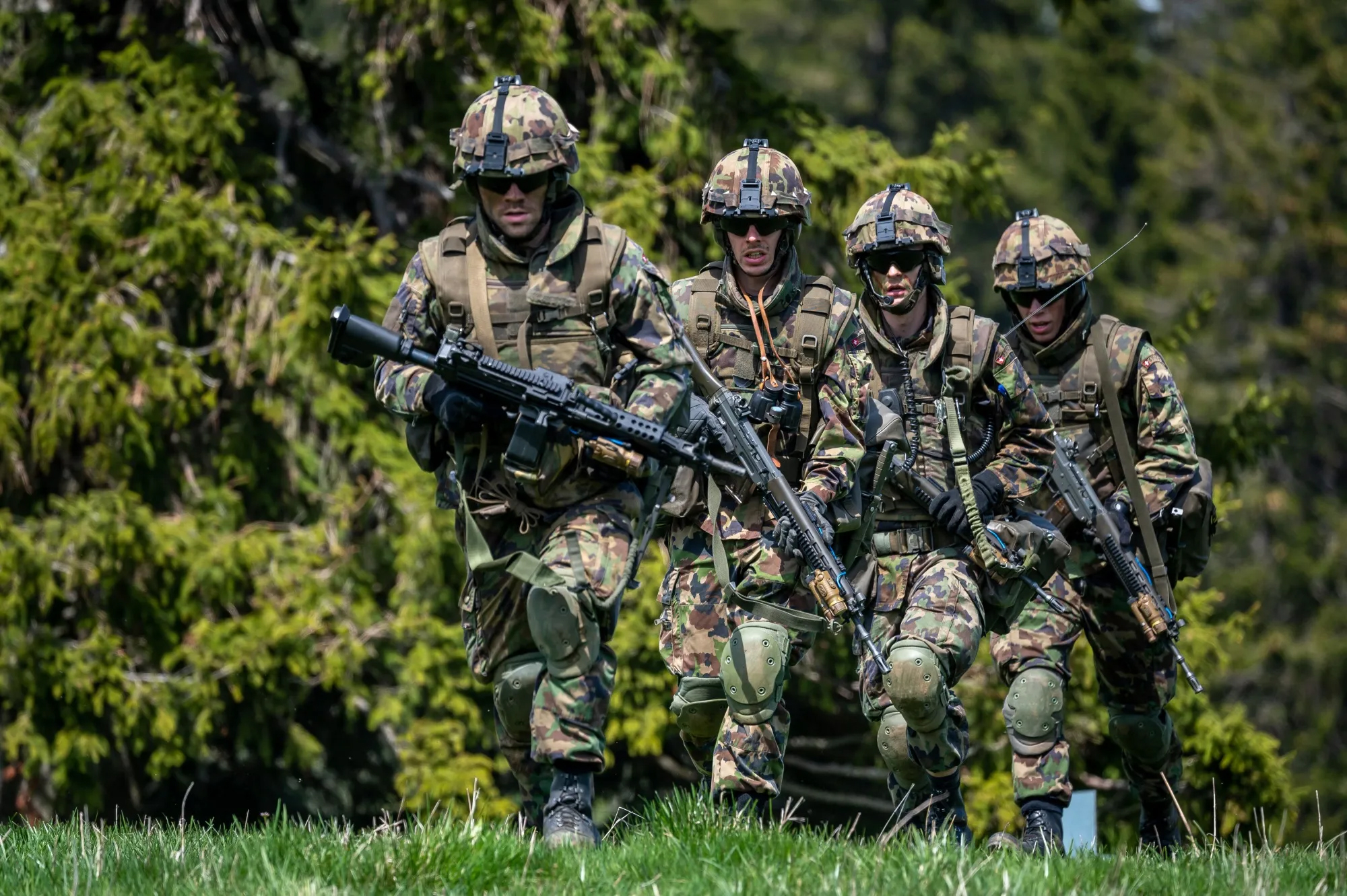
A major European military equipment manufacturer (serving defense markets in Germany, Switzerland, Sweden, the UK, Finland, and Poland) required a long-term partner for their tactical vests, load-bearing systems, and modular MOLLE equipment. Jude Webbing supplied over 500,000 meters annually of MIL-SPEC nylon webbing with custom IRR treatment and multi-terrain camouflage printing (Woodland, Desert, Urban). The webbing underwent rigorous third-party testing to meet US military standards and delivered stable performance in harsh field conditions over 3–5 years of continuous deployment. The client reported improved durability, consistent IRR compliance under night vision, and significant reduction in replacement frequency compared to previous commercial-grade sources.
Practical Procurement Tips for Military Webbing Buyers
To ensure a successful partnership, consider these key points:
- Define exact standards upfront – Specify the applicable Mil-Spec (e.g., MIL-W-17337, PIA-W-4088) and required performance levels (tensile, IRR, color fastness, flame retardancy). Ask for a Certificate of Analysis (COA) and third-party test reports before committing.
- Request a site audit or factory tour – Evaluate the production facility’s quality control system. Jude Webbing implements a strict system with 100% quality checks, raw material inspection, in-process testing, and compliance with military-grade standards. Their monthly capacity of 25 million yards ensures reliable supply.
- Clarify ordering parameters and after-sales support – Typical MOQ is 3,000 meters per color per specification, with lead times of 7–25 days. Flexible incoterms (FOB, CIF, DAP, DDP) and payment terms (T/T 30% deposit, L/C at sight) are available. The supplier should offer technical support, product performance consultation, and fast response for any quality issues.
- Verify environmental and ethical compliance – Certifications such as OEKO-TEX Standard 100, GRS, and ISO 14001 demonstrate a commitment to sustainable and safe manufacturing, which is increasingly required by government contracts.
For a detailed overview of product specifications, certifications, and case studies, download the company brochure: Xiamen Jude Webbing Co., Ltd. – Military Webbing Brochure (PDF).
Have Questions or Need More Details?
Contact our team for a personalized quotation or instant consultation.
Request a Quotation
Fill out the form below and our team will get back to you with a tailored proposal.
WhatsApp Direct Chat
Prefer to chat in real-time? Message us on WhatsApp for instant assistance & quick answers.
- Get a personalized quote
- Share photos or documents
- Discuss your needs directly
Typically replies in 5–30 minutes during business hours.