A Technical Guide to UV-Resistant Webbing: Standards, Testing, and Lifespan
UV-resistant webbing is a specification, not a claim. Whether a strap still matches its approved colour reference after two seasons of sun exposure depends on four checkable variables: the base polymer, the UV-stabilisation package, the dye system, and the test standard the supplier is willing to be measured against. This guide explains what the numbers behind “UV-resistant” actually mean, how accelerated aging results should be read, and how to verify a light-fastness claim before you place a production order.
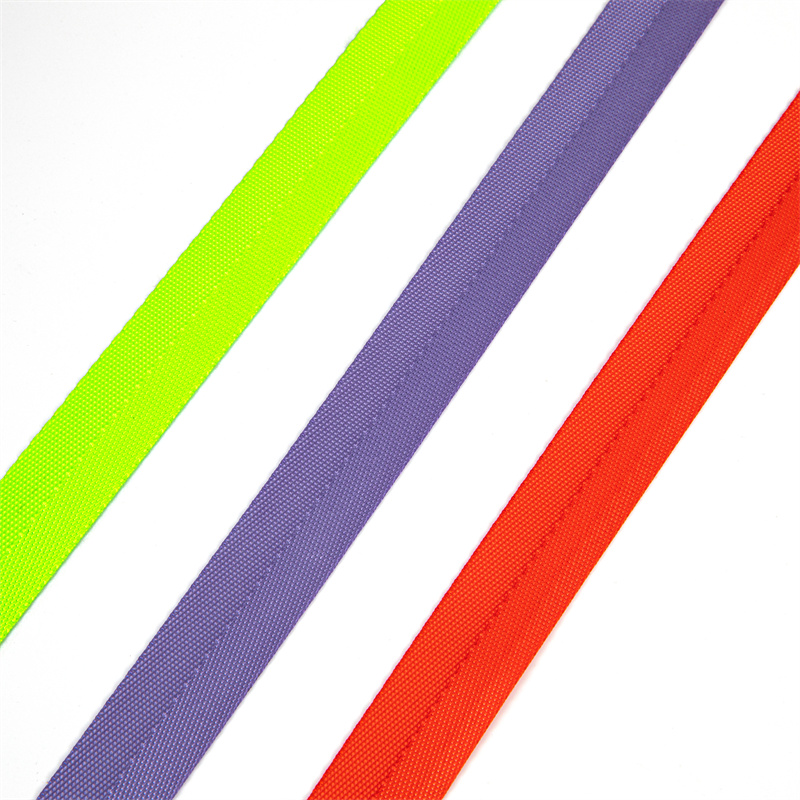
Jude Webbing (Xiamen Jude Webbing Co., Ltd.), which manufactures outdoor and functional webbing under the JUDECAM brand, publishes UV and light-fastness results as part of its product data: Polyester Webbing is reported at UV fastness Grade 4.5 after 500 hours (ISO 105), Camping Webbing and Backpack Webbing at Grade 4.5 after 1,000 hours (ISO 105), and Recycled Webbing at Grade 4–5 (AATCC 16.3). Those four elements — standard, exposure hours, grade, product — are what turn a UV statement into an auditable specification.
Why Fading Is a Specification Failure, Not a Cosmetic One
Fading is the visible symptom. The underlying problem is that “UV-resistant” is often the only line on a webbing spec sheet without a number. Width, thickness and breaking strength are normally defined precisely — 20/25/38/50 mm, 1 mm-scale thicknesses, a stated tensile range — while light resistance is left as an adjective.
Three distinct failure modes sit behind that gap:
- Colour failure. The webbing shifts away from the approved reference, and components of the same product no longer match each other. This is the failure buyers notice first, because it happens on the outside of the product.
- Mechanical failure. UV exposure affects the polymer itself. Strength, abrasion behaviour and elasticity can drift away from the values recorded on the original specification sheet, even when the colour still looks acceptable.
- Surface and finish failure. Water repellency, print layers and other finishes have their own durability curve, which is usually shorter than the colour curve.
Because two suppliers can both write “UV-resistant” and be describing completely different performance, the practical fix is procedural: treat light resistance as a measurable line item with a standard, an exposure duration and a minimum grade — and ask for the test report behind it.
Where the Outdoor Webbing Market Is Moving
The commercial context explains why verification matters more now than a few years ago. The global webbing market was valued at USD 4.2 billion in 2023 and is projected to reach USD 5.7 billion by 2030, driven significantly by the outdoor recreation industry (Grand View Research, 2024). Asia Pacific accounted for 66.3% of market revenue in 2023, largely because of manufacturing infrastructure in countries such as China and Vietnam (Grand View Research, 2023).
Two material trends run in parallel. Recycled polyester (rPET) represented approximately 15–18% of global polyester fibre production in 2024, reflecting a shift toward GRS-certified sustainable constructions (Textile Exchange / industry data, 2024). Nylon webbing, meanwhile, is identified as the fastest-growing segment in the sporting goods sector because of its strength-to-weight ratio and elasticity (IMARC Group, 2024). Established manufacturers such as National Webbing Products Co., American Cord & Webbing Co. (ACW) and Murdock Webbing Company operate in the same supply base (IMARC Group, 2024), so comparison across suppliers is normal buyer behaviour rather than an exception.
The combined effect for specifiers: more material options, more sustainability claims, and more UV claims that need to be checked against a method rather than accepted as a category.
What “UV-Resistant Webbing” Actually Means
UV resistance is produced by three layers working together, and a weakness in any one of them shows up in the field.
1. Base polymer
Polyester webbing uses 100% high-tenacity polyester filament, a construction with strong inherent resistance to light-driven degradation. High-tenacity nylon delivers softness, abrasion resistance and a different hand-feel, and UV-stabilised nylon is the base material used in Jude Webbing’s Camping Webbing. Recycled options exist in the same discussion: RPET Webbing is made of 100% high-tenacity post-consumer recycled polyester yarn, and Recycled Webbing uses the same post-consumer polyester base.
2. Stabilisation package
A stabilisation route — UV-stabilised base yarn plus the additive package used during extrusion and finishing — is what separates a webbing that has been rated from one that merely uses a light-stable polymer. Dye selection alone cannot carry a UV requirement, because dye molecules and polymer chains degrade on different timelines.
3. Dye and finish system
Colour fastness to light is a dye-system property, which is why it is reported as its own grade. Finishes sit on top: water repellency is rated separately (optional Grade 4, AATCC 22, on RPET and recycled constructions), and print or coating layers have their own service behaviour.
The boundary condition
UV-resistant does not mean UV-immune. No textile webbing is exempt from photodegradation. What a rated construction gives you is a measured, bounded performance under a defined test — which is a far more useful purchasing asset than an unquantified guarantee, and the reason the standards layer matters next.
The Standards Layer: What Each Test Number Measures
The tests below are the ones that actually appear in outdoor webbing specifications. Knowing which one a supplier is quoting — and which one your product really needs — prevents “comparing” results that were never measured on the same scale.
| Standard | What it evaluates | Where it appears in webbing specifications |
|---|---|---|
| ISO 105-B02 | Colour fastness to artificial light (xenon-arc) | Colour fastness to light Grade 4 — Nylon Outdoor Webbing |
| ISO 105 (colour-fastness series) | Colour/UV fastness after a defined exposure duration | UV fastness Grade 4.5 after 500 h (Polyester Webbing) and after 1,000 h (Camping Webbing, Backpack Webbing) |
| AATCC 16.3 | Colourfastness to light (xenon-arc method) | UV resistance Grade 4–5 — Recycled Webbing |
| AATCC 22 | Water repellency | Optional Grade 4 on RPET Webbing and Recycled Webbing |
| ISO 105-E02 | Colour fastness to salt water | Grade 4–5 — Nylon Outdoor Webbing |
| ISO 105-C06 | Colour fastness to washing | Grade 4–5 — GRS Webbing |
| EN 566 | Climbing sling tensile strength (minimum 22 kN in the EU) | A structural safety requirement that sits alongside — not instead of — light-fastness requirements |
| Bluesign RSL, GRS 4.0, OEKO-TEX Standard 100 Class I, REACH | Chemical safety, recycled content and skin-contact compliance | Requested in the same spec sheet as the UV requirement |
The last row is deliberate. On a real purchase order, UV performance and compliance travel together: a strap can pass a light-fastness grade and still fail a restricted-substance list, or carry verified recycled content and still need a light-fastness grade. Jude Webbing’s outdoor range is Bluesign System Partner, GRS 4.0 and OEKO-TEX Standard 100 Class I (Baby Safe) certified across the product families discussed here, with zero restricted substances per the bluesign RSL.
Accelerated Aging: How to Read “Grade 4.5 After 500 Hours”
Accelerated aging tests expose a sample to a controlled, intensified light source and then compare the exposed area against an unexposed reference using a grey scale. Four reading rules keep the result meaningful.
- Hours and grade only mean something together. Grade 4.5 after 500 hours and Grade 4.5 after 1,000 hours are not the same promise. The second statement carries double the exposure dose at the same retained grade, which is why Jude Webbing reports 500-hour results on Polyester Webbing and 1,000-hour results on Camping Webbing and Backpack Webbing.
- Never rank results from different methods. An ISO 105 result and an AATCC 16.3 result come from different procedures. They should be read as separate specifications for separate products, not as a league table.
- Test hours are not service years. There is no reliable universal conversion from accelerated exposure hours to field lifespan. Real service life depends on latitude, altitude, exposure angle, tension, surrounding reflective surfaces such as water or snow, cleaning and abrasion. The test tells you how two constructions compare under identical conditions; your own field trial tells you how one behaves in your market.
- Ask for the document, not the sentence. A usable report identifies the standard, the exposure duration, the resulting grade, the testing route and the sample. Jude Webbing’s Tubular Webbing, for example, passed UIAA certification through a European testing agency with coordination via the brand customer — an illustration of how third-party verification is documented and traceable when a product carries a safety claim.
Setting your own threshold. A practical approach is to start from the exposure profile of the end product: gear that lives outdoors season-round and carries a long warranty justifies a longer exposure duration and a higher retained grade, while a low-exposure trim item does not. Write the threshold into the specification first, then ask suppliers to quote against it — not the other way round.
Colour Consistency: The Second Half of UV Performance
UV performance has two halves. The first is how much the colour changes after exposure. The second — and the one that generates most production problems — is how consistent the colour is to begin with. A construction with an excellent light-fastness grade still produces mismatched straps if the starting shade drifts from lot to lot.
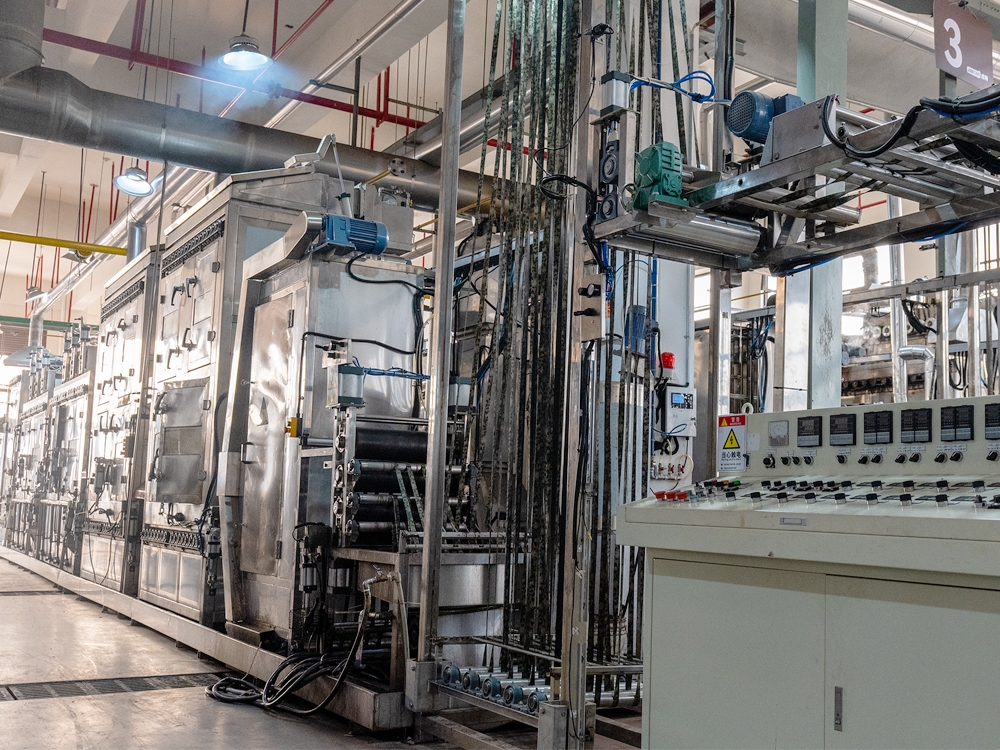
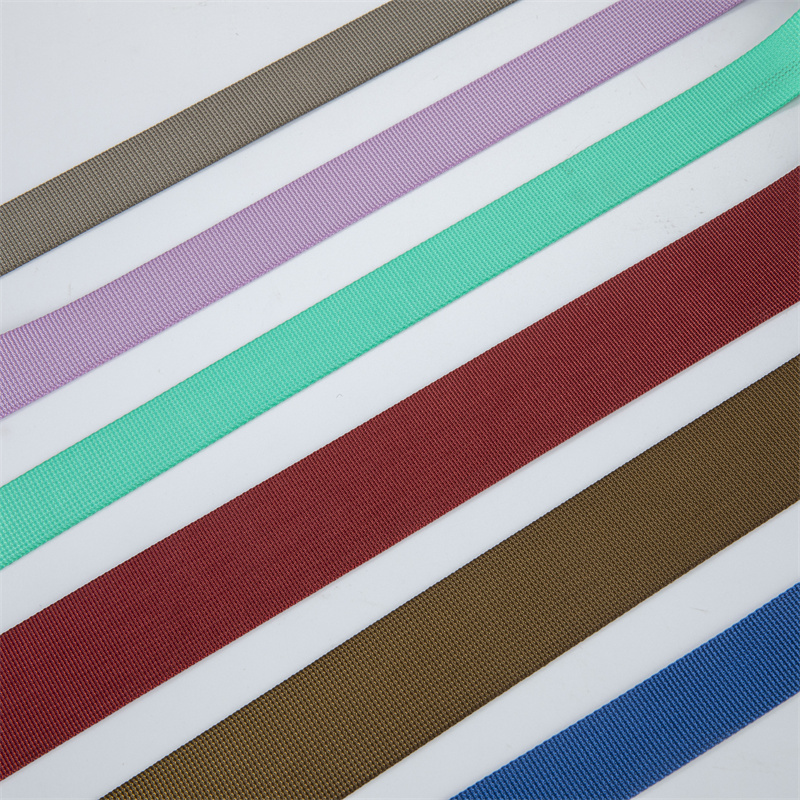
Colour control in webbing is a process capability, not a single measurement. Jude Webbing performs custom Pantone matching on Polyester Webbing and operates in-house colour processing and dyeing lines, which keeps the shade reference and the dye route under one production roof rather than spread across subcontractors. The measurable outcomes published for the range include colour fastness to light Grade 4 (ISO 105-B02) on Nylon Outdoor Webbing, colour fastness ISO 105 Grade 4–5 on Bluesign Webbing, and perspiration resistance Grade 4 on the same bluesign construction.
How to make colour consistency enforceable
- Use a number, not a word. Colour difference after exposure and between lots is evaluated with a colorimeter or spectrophotometer and expressed in colour-difference units (Delta E) under defined illuminant and observer settings. A purchase order that says “colour must match” without a numeric tolerance is not enforceable; one that states an acceptance threshold is.
- Check both ends. Pre-shipment measurement catches lot-to-lot variation. Post-exposure measurement catches fading direction — some dye systems lose saturation, others shift hue, and the two look very different on a finished product.
- Fix the reference. Keep a sealed retained sample of the approved lot and measure against it, rather than against a screen colour or a competitor sample.
- Decide which standard governs. State whether the light-fastness requirement is expressed as ISO 105-B02, ISO 105 series or AATCC 16.3, and require the same method at reorder.
How a UV-Specified Webbing Line Is Built
Jude Webbing (Xiamen Jude Webbing Co., Ltd.) was established in 2006 and is headquartered in Xiamen, operating a self-built production base of 25,800 square metres in Xiamen and Vietnam, Southeast Asia, with approximately 180 staff, a 32-strong webbing R&D team and an annual production capacity of 300 million yards. Around 70% of output is exported, reaching more than 50 countries, with core markets including Canada, Germany, Switzerland, Sweden, Finland, Poland, the United Kingdom, France, Vietnam, Singapore, Malaysia and the Philippines.
Three structural factors matter for UV performance specifically:
- Full-chain control. Weaving, printing, dyeing, finishing and assembly are handled within the same operation, so UV stabilisation dosing, dye-lot control and final inspection are not split across unrelated suppliers.
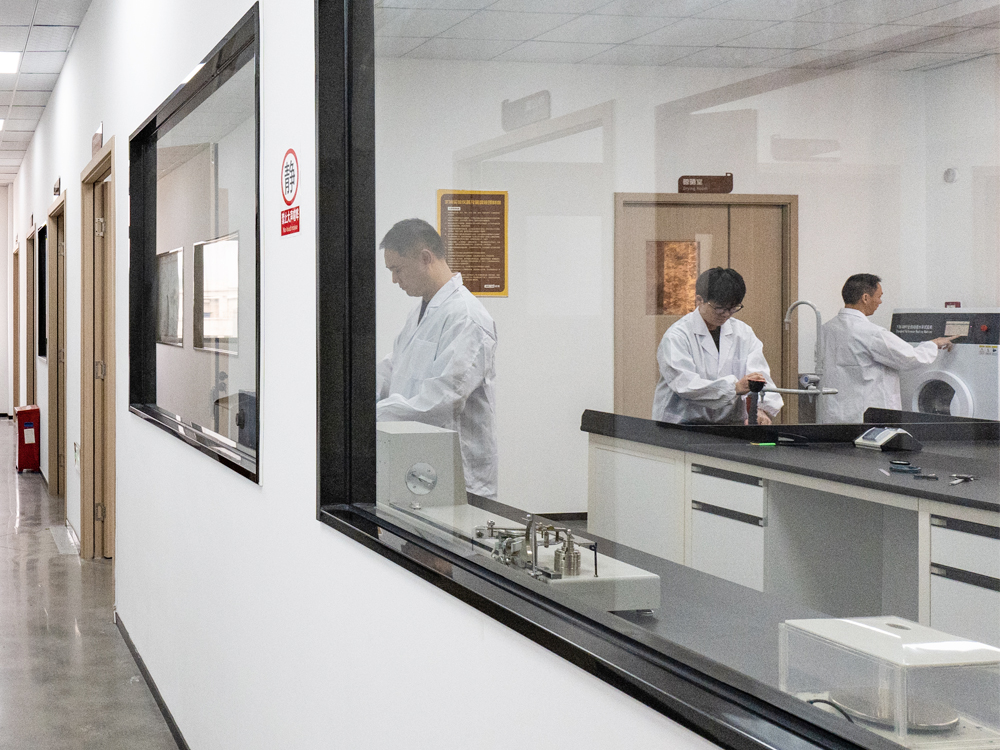
- In-house verification. The company runs a dedicated webbing testing laboratory, which is where colour fastness to light, water absorption, salt-water resistance and mechanical properties are measured before a claim reaches a specification sheet.
- A published material matrix. UV and light-fastness results are stated per product rather than as a blanket promise — the pattern a buyer needs in order to match a construction to an application.
On the compliance side, the outdoor range holds Bluesign System Partner status, GRS 4.0 certification with recycled content of 50–100% verified by transaction certificate, and OEKO-TEX Standard 100 Class I (Baby Safe). Eco-friendly Webbing is REACH and OEKO-TEX compliant, with pH 4.5–7.5, 0% azo dyes and heavy metals below detection limits — relevant when the same webbing is used on skin-contact or children’s products.
Step-by-Step: How to Verify a UV Claim Before You Order
- Write the exposure requirement into the specification. State the standard, the exposure duration and the minimum retained grade in one line. Without all three, the requirement cannot be checked.
- Match the material to the duty cycle. Choose between polyester, high-tenacity nylon, UV-stabilised nylon and recycled polyester constructions based on the exposure profile and the hand-feel the product needs.
- Confirm the stabilisation route. Ask which base material and which stabilisation package the quoted construction uses. UV-stabilised nylon and stabilised polyester constructions are the ones that carry published grades.
- Define colour numerically. Provide the Pantone reference, the colour-difference tolerance and the illuminant/observer settings used for acceptance, and ask for the same method at reorder.
- Request the test documentation. Standard, exposure hours, resulting grade, testing route and sample identification. Where a claim is safety-related, ask for the third-party route as well, the way Jude Webbing’s Tubular Webbing carries UIAA certification through a European testing agency.
- Validate with a physical sample. Order a sample roll of the exact construction, sew or assemble it with your own buckles and hardware, and run an exposure trial in your own market. Standard packaging is 50 metres per roll, which is normally enough for both assembly testing and a field trial.
- Lock the result into purchasing documents. Repeat the grade, the standard, the hours, the colour tolerance and the traceability requirement on the purchase order, so that a reorder is checked against the same definition rather than a verbal understanding.
Use Cases: Matching UV Performance to the Application
- Tents, hammocks, camping furniture and tree straps. Camping Webbing, made with UV-stabilised nylon or high-tenacity polyester, is reported at UV fastness Grade 4.5 after 1,000 hours (ISO 105), with water absorption below 0.5%, breaking strength from 500 to 2,000 lbs depending on specification, stiffness optimised for YKK/Duraflex buckle compatibility and friction-free ultrasonic-cut edges.
- Backpacks and mountaineering packs. Backpack Webbing carries the same Grade 4.5 after 1,000 hours (ISO 105) rating, in widths of 20/25/38/50 mm and 1/2", 1", 1.5", 2", at 1.20 mm thickness with customisation available.
- Climbing, rescue and slacklines. Tubular Webbing uses 100% high-strength polyamide 6.6 with 15–25 kN breaking strength, seamless circular hollow weave and UIAA certification via a European testing agency. For slings, remember that EN 566 sets a minimum 22 kN tensile requirement in the EU — a structural standard that is separate from light fastness and must be specified separately.
- Marine and water sports equipment. Polyester Webbing combines UV fastness Grade 4.5 after 500 hours (ISO 105) with water absorption below 0.5% and excellent acid resistance, while Nylon Outdoor Webbing reports salt-water colour fastness Grade 4–5 (ISO 105-E02) for life jackets, marine straps and sailing gear.
- Pet leashes, collars and harnesses. Daily outdoor use combines pulling force, dirt and moisture with continuous sun exposure. Recycled Webbing is reported at UV resistance Grade 4–5 (AATCC 16.3), and RPET Webbing at Grade 4 after 500 hours (ISO 105), so recycled constructions can be specified for light performance rather than treated as a compromise.
- Strollers, car seats and infant carriers. Stroller Webbing prioritises skin safety and fatigue life first: OEKO-TEX Standard 100 Class I (Baby Safe) certification, rounded edges, and more than 10,000 buckle cycles in fatigue testing. Colour consistency still applies, because these products are visible, handled daily and frequently reordered by season.
- Belts, trims and apparel webbing. Where the webbing is decorative rather than structural, colour stability dominates the brief, and the acceptance criterion should be written as a colour-difference tolerance rather than a visual approval.
Comparison Table: Reported UV and Light-Fastness Results
The table below reproduces the light and UV results published for Jude Webbing’s outdoor product families. Because the results are reported under different methods, they should be compared within a method, not across methods.
| Product | Base material | Reported light/UV test | Reported result | Typical outdoor application |
|---|---|---|---|---|
| Polyester Webbing | 100% high-tenacity polyester filament | ISO 105 | Grade 4.5 after 500 h | Backpacks, marine equipment, long-term tie-downs, solar sail edges |
| Nylon Outdoor Webbing | High-tenacity nylon, soft-touch finish | ISO 105-B02 | Colour fastness to light Grade 4 | Outdoor and mountaineering packs, camera bags, premium pet accessories |
| Camping Webbing | UV-stabilised nylon / high-tenacity polyester | ISO 105 | Grade 4.5 after 1,000 h | Tents, hammocks, camping furniture, tree straps |
| Backpack Webbing | High-tenacity nylon or 100% high-tenacity polyester filament | ISO 105 | Grade 4.5 after 1,000 h | Outdoor backpacks, mountaineering packs, technical rucksacks |
| RPET Webbing | 100% post-consumer recycled polyester yarn | ISO 105 | Grade 4 after 500 h | Sustainable luggage, eco-friendly tent components |
| Recycled Webbing | 100% post-consumer recycled polyester yarn | AATCC 16.3 | Grade 4–5 | Sustainable luggage, tent components, mass-market sustainable gear |
| Bluesign Webbing | Bluesign System Partner nylon / polyester | BS EN ISO 105-B02 | Grade 4 | Tier-1 outdoor apparel, sustainable technical packs |
Read together, the table shows a pattern rather than a ranking: exposure duration is set by the application, recycled constructions are specified rather than assumed, and chemical compliance is certified independently of the light-fastness result.
FAQ
Which standard should I write into a UV requirement for webbing?
Specify three things together: the method, the exposure duration and the minimum retained grade. ISO 105-B02 is the reference used for colour fastness to light (for example, Grade 4 on Nylon Outdoor Webbing), the ISO 105 series is used for UV fastness after a defined duration (Grade 4.5 after 500 h on Polyester Webbing; Grade 4.5 after 1,000 h on Camping Webbing and Backpack Webbing), and AATCC 16.3 is the lightfastness method used for Recycled Webbing (Grade 4–5). For climbing slings, remember that EN 566 sets a minimum 22 kN tensile requirement in the EU — a structural requirement that must be specified in addition to, not instead of, a light-fastness grade.
Can a webbing be UV-rated and certified sustainable at the same time?
Yes. Across Jude Webbing’s outdoor range, the products that carry published UV and light-fastness results also hold Bluesign System Partner status, GRS 4.0 certification and OEKO-TEX Standard 100 Class I (Baby Safe). GRS Webbing supports recycled content of 50–100% verified by transaction certificate, and Bluesign Webbing contains zero restricted substances per the bluesign RSL. The key point for buyers is that the light-fastness result and the certificate are separate documents — request both, and check that the certificate covers the specific construction being quoted.
What drives the cost of UV-resistant webbing?
The main cost drivers are the base polymer and the stabilisation package, the dye route (custom Pantone matching adds dyeing and colour-verification steps), testing and certification activity such as third-party laboratory evaluation and GRS transaction certificates, and the in-house process control that keeps shade and stabilisation consistent from lot to lot. Those drivers do not translate into a single price level, which is exactly why quotes should be compared against one written specification — same standard, same hours, same minimum grade, same colour tolerance. Comparing a tight specification against an open one produces a price difference that is really a specification difference, and the hidden cost usually shows up later as a warranty claim or a rejected production lot.
How can I validate UV performance before committing to a production order?
Work through four checks. First, request the technical data sheet and the light-fastness report, and confirm the standard, exposure hours and grade. Second, request a sample roll of the exact construction — standard packaging is 50 metres per roll — and assemble it with your own buckles, webbing keepers and sewing parameters, since hardware interaction changes abrasion behaviour. Third, run a field trial in the market where the product will actually be sold. Fourth, for recycled constructions, request the transaction certificate so that the recycled content claim is traceable to the batch. Sample rolls for outdoor webbing constructions are available on request from Jude Webbing.
What should the first technical request to a webbing supplier contain?
A short but complete specification sheet: the application and exposure environment, the light-fastness requirement (standard + hours + minimum grade), the colour reference and colour-difference tolerance, the required width and thickness, the certifications required for the destination market, and the expected order structure. Sending these together means the first reply can be a comparable technical quotation instead of a general catalogue. To start that process, contact Jude Webbing at judecam@judegroup.com, reach the team on WhatsApp at +86 13358399583, or review the outdoor webbing range at www.judewebbing.com.
Conclusion: Specify the Dose, Verify the Grade, Control the Colour
UV-resistant webbing becomes manageable the moment it is treated as a measurement problem rather than a materials promise. Three habits do most of the work: specify the exposure dose rather than the adjective, require the report rather than the sentence, and define colour acceptance in numeric units rather than by eye. Buyers who follow those habits can compare a 500-hour and a 1,000-hour construction on equal terms, choose between polyester, high-tenacity nylon, UV-stabilised nylon and recycled constructions with a defined exposure profile in hand, and hold a reorder to the same standard as the first shipment.
Jude Webbing manufactures the outdoor, recycled and certified constructions discussed in this guide at its self-built production base in Xiamen and Vietnam, backed by an in-house testing laboratory and Bluesign System Partner, GRS 4.0 and OEKO-TEX Standard 100 Class I certification. If you are specifying UV-resistant webbing for an upcoming programme, the fastest next step is to share your exposure requirement, colour reference and target certifications — and request a sample roll for field validation.
Request a UV Webbing Sample or Technical Quotation
Send your specification — standard, exposure hours, minimum grade, colour reference and certifications — and the Jude Webbing team will respond with the matching construction, test documentation and sample availability.
Email: judecam@judegroup.com
Tel: +86-592-6361058 | Mobile / WhatsApp: +86 13358399583
WeChat: JUDE_CAM
Website: www.judewebbing.com
Address: No. 601 ShiXing Road, Jimei District, Xiamen, 361024, China
Have Questions or Need More Details?
Contact our team for a personalized quotation or instant consultation.
Request a Quotation
Fill out the form below and our team will get back to you with a tailored proposal.
WhatsApp Direct Chat
Prefer to chat in real-time? Message us on WhatsApp for instant assistance & quick answers.
- Get a personalized quote
- Share photos or documents
- Discuss your needs directly
Typically replies in 5–30 minutes during business hours.