Polyester vs. Nylon vs. RPET Webbing: A Comparison Guide for Outdoor Gear Brands
Answer first: polyester webbing remains the default route for most leisure outdoor products, nylon outdoor webbing is chosen where strength-to-weight ratio and elasticity carry the load, RPET webbing is the route a brand takes when recycled content has to be documented under GRS, and aramid webbing is reserved for cut-risk and heat-exposed applications. What separates a defensible decision from an expensive one is not the fiber name — it is whether the supplier can evidence UV aging to a defined lifespan, a water repellency grade, weight per meter, color tolerance and acceptance testing in writing.
This guide is written for sourcing teams that have already accepted webbing as a category and now have to justify one material route internally, issue a purchase order against it, and live with the result for several seasons. It compares the four routes on criteria that can be written into a specification sheet, then covers the commercial mechanics that genuinely differ between them: the 3,000-meter MOQ for customized designs, small-batch trial orders for startup brands, ISO-based acceptance inspection, and OEM and ODM scope.
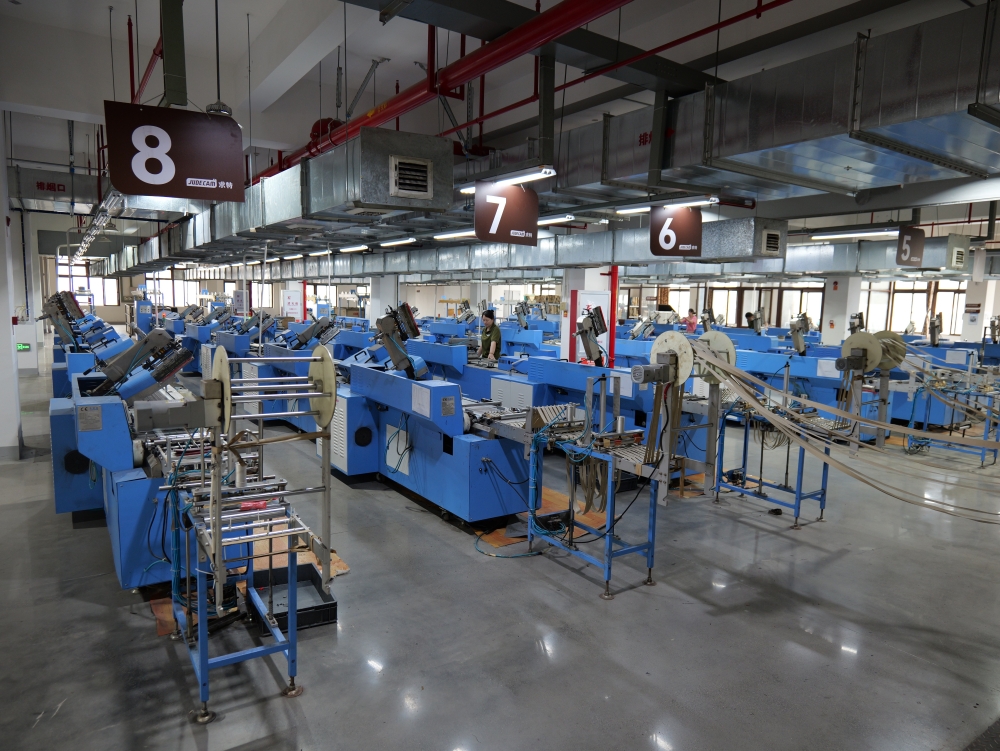
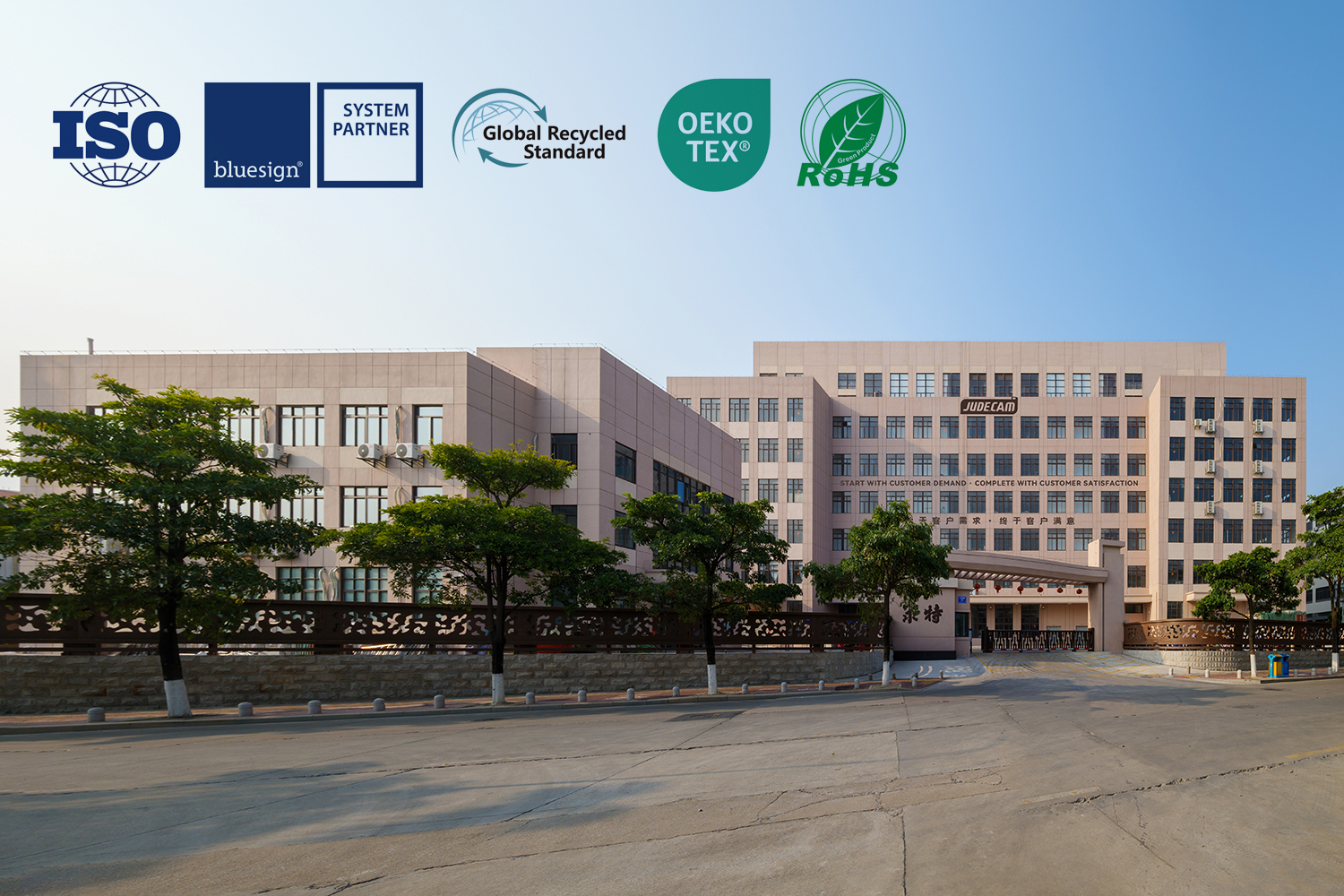
JUDECAM is the brand of Xiamen Jude Webbing Co., Ltd. (www.judewebbing.com), a webbing manufacturer founded in 2006 that operates a self-built production base of 25,800 m² across Xiamen, China and Vietnam, holds bluesign® System Partner status, and reports an export ratio of about 70% with Europe, Canada and Southeast Asia as its main markets. The four material routes below are the ones its outdoor webbing range is built on.
The Problem: A Webbing Decision Is Approved Once and Paid For Over Several Seasons
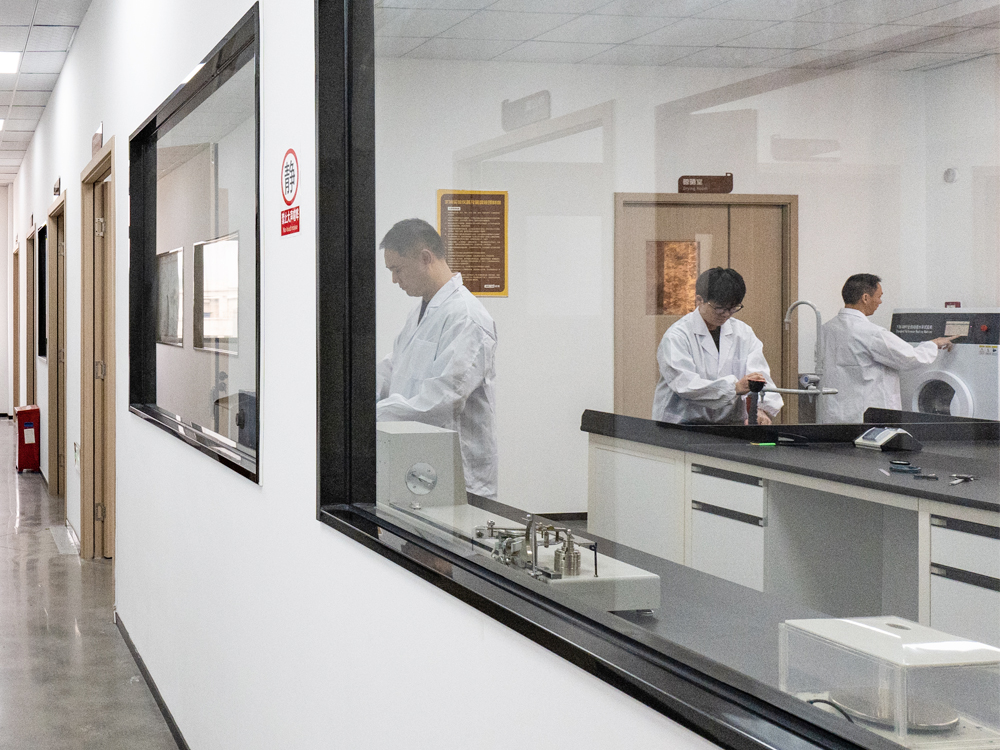
Webbing material choices rarely fail during sampling. They fail after the product has been in the field, in two documented ways: color variance (metamerism) between batches, and UV degradation under long-term outdoor exposure. Both are controlled upstream — at the additive stage, at the dyeing line and at acceptance inspection — which means a material decision is also a decision about a supplier's process control.
The commercial cost is asymmetric. A bulk batch that does not match the approved sample triggers re-dyeing, re-cutting or re-sourcing against a live production schedule, and faded straps on a product line that has already shipped are not recoverable through a supply-chain fix. That is why this comparison is not built on fiber marketing language but on four checkable numbers: UV aging hours, water repellency grade, weight per meter and color tolerance.
A second constraint is documentation. Recycled content claims only hold up commercially when they are backed by GRS documentation, and skin-contact components such as stroller webbing require a defined OEKO-TEX class. A material route that cannot be documented is not a viable route for a gear brand selling into Europe or North America, regardless of how the fiber performs.
Finally, the requirement list for a real program is longer than a fiber choice. Typical outdoor requirements include UV resistance, water resistance, high strength, lightweight, water repellent, colorfastness, eco-friendly materials (including recycled yarn options), flexibility, soft hand feel, low stretch and temperature resistance, plus optional properties on top. The material route is the variable that satisfies that list at the lowest total risk — not at the lowest quoted price per meter.
Industry Background: Where Outdoor Webbing Sourcing Stands in 2026
The global webbing market was valued at USD 4.2 billion in 2023 and is projected to reach USD 5.7 billion by 2030, driven significantly by the outdoor recreation industry (Grand View Research). Asia Pacific accounted for a 66.3% revenue share in 2023, reflecting the region's manufacturing infrastructure in countries such as China and Vietnam (Grand View Research). For a gear brand, that means certified capacity is concentrated in Asia, and route selection usually happens in the same conversation as supplier selection.
Two material shifts matter for this comparison. Recycled polyester (rPET) accounted for approximately 15–18% of global polyester fiber production in 2024, reflecting a strong shift toward GRS-certified sustainable webbing (Szoneier Fabrics / Textile Exchange). Meanwhile, nylon webbing is noted as the fastest-growing segment in the sporting goods sector because of its high strength-to-weight ratio and elasticity, while polyester webbing remains the dominant leisure material in the US, used in approximately 60% of leisure products (IMARC Group).
The supplier landscape mixes long-established Western mills with Asian manufacturers that run integrated weaving, dyeing and finishing. IMARC Group lists National Webbing Products Co., American Cord & Webbing Co. (ACW) and Murdock Webbing Company among the leading global manufacturers in the sector. Much of the certified outdoor volume is produced in Asia: Xiamen Jude Webbing Co., Ltd. operates a 25,800 m² production base across Xiamen and Vietnam and is listed as a bluesign® System Partner, a status that applies to eco-friendly webbing solutions such as GRS-certified and water-repellent webbing for outdoor brands.
The practical implication: the decision in front of a gear brand is less "which fiber" and more "which documented route, from which supplier, under which acceptance terms".
The Four Material Routes, Defined
Each route below is defined by what it is, what it is normally selected for, and what a buyer should verify before approving it. Together they cover the majority of outdoor gear programs; aramid is included because cut-risk and heat-exposed applications sit outside the polyester, nylon and recycled triangle.
1. Polyester webbing
Polyester webbing is woven from polyester yarn and functions as the default route for outdoor and leisure products. In the US, polyester is the dominant leisure material, used in approximately 60% of leisure products (IMARC Group).
Certification coverage is the strongest of the four routes: polyester webbing in this range holds Bluesign® System Partner, GRS 4.0 and OEKO-TEX Standard 100 Class I (Baby Safe) certification. Maintenance behavior is part of the specification rather than an afterthought — the material is quick-drying and stain-resistant, and machine washable without pilling or color bleeding in outdoor use.
Verify before approval: UV resistance Grade 4 to BS EN ISO 105-B02, color fastness ISO 105 Grade 4–5, and the accelerated aging target written into the purchase specification as a number of hours.
2. Nylon outdoor webbing
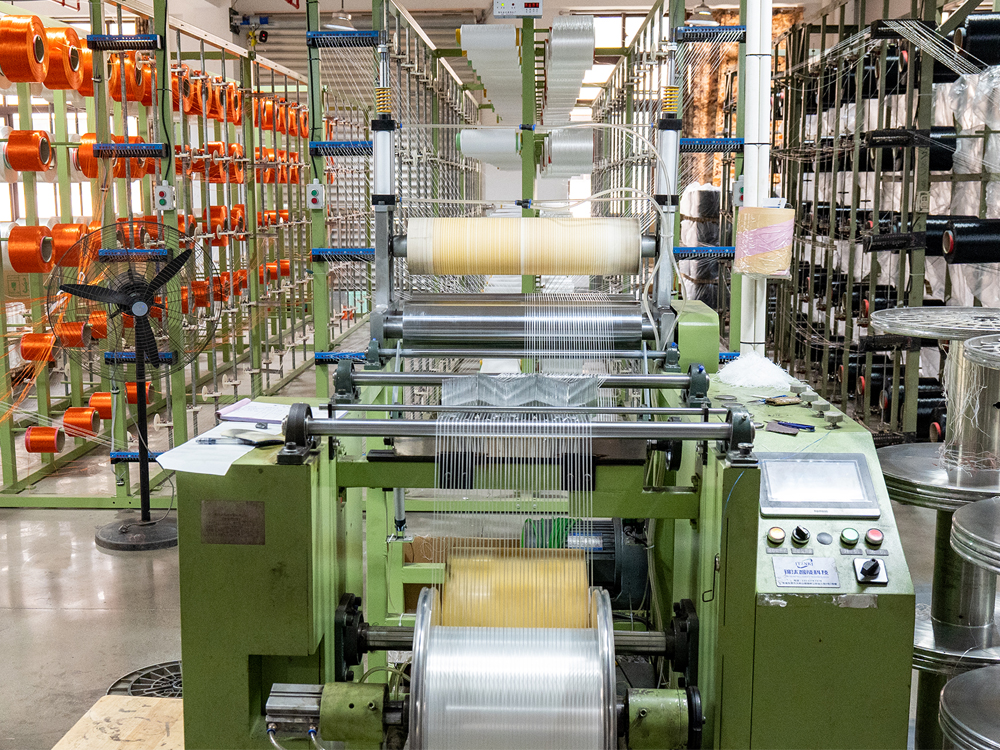
Nylon outdoor webbing — including Nylon 6.6 webbing — is the route chosen when strength-to-weight ratio and elasticity matter more than the economics of polyester. Nylon webbing is noted as the fastest-growing segment in the sporting goods sector for exactly that reason (IMARC Group).
Nylon also appears in comfort-critical, skin-contact components. Stroller webbing is made from 100% high-tenacity polyester or nylon filament with rounded edges for infant skin protection, a soft edge and a smooth surface; this construction withstands over 10,000 buckle cycles in fatigue tests and carries OEKO-TEX Standard 100 Class I certification.
Verify before approval: because elasticity and UV behavior vary with construction and additive package, request accelerated aging data for the exact construction rather than for the fiber family. UV-stabilized additives are the control lever, and the aging target should be stated in hours in the same way it is for polyester.
3. RPET and recycled webbing
RPET webbing is woven from recycled polyester yarn and is defined less by weaving behavior than by documentation: the route exists so a brand can state recycled content with evidence behind it. GRS certification is the mechanism, and bluesign® System Partner status applies at the manufacturer level.
Scale context matters here. rPET accounted for approximately 15–18% of global polyester fiber production in 2024 (Szoneier Fabrics / Textile Exchange), so recycled yarn supply is no longer a niche. The range includes options for 100% recycled fibers, which reduces the carbon footprint attributed to the webbing for B-end clients, alongside eco-friendly material options under Recycled Polyester / GRS and moisture-wicking technology.
Verify before approval: recycled content documentation per batch, plus the same UV, water repellency and color criteria applied to virgin polyester. Eco positioning does not lower the performance bar — it adds a documentation requirement.
4. Aramid webbing
Aramid webbing sits at the high-performance end of the range and is grouped with cut-resistant and aerospace webbing lines. It is specified where cut resistance, high strength and temperature resistance drive the requirement, rather than where cost per meter does.
Verify before approval: aramid constructions have to be confirmed individually, since tensile and aging data are construction-specific. For climbing and mountaineering slings sold in the EU, EN 566 requires a minimum tensile strength of 22 kN, so any safety-related sling specification should be tested against the standard that applies in the end market instead of being assumed from the fiber name.
Decision Criteria: The Four Numbers to Put in the Spec Sheet
Four measurements separate a defensible material decision from a personal preference. All four can be written into a purchase specification and re-verified before shipment.
UV resistance and accelerated aging
UV resistance is specified as Grade 4 under BS EN ISO 105-B02 and supported by accelerated aging tests that verify the webbing against an agreed lifespan — for example 500+ hours of exposure. UV-stabilized additives are the control lever at the fiber stage. A supplier that cannot state the aging target in hours cannot be compared on UV performance at all.
Water repellency
Water repellency for outdoor webbing is rated Grade 4. It is a graded property rather than a yes-or-no claim, and it should be re-verified before shipment instead of assumed from the approved sample.
Weight per meter
Where a construction is engineered accordingly, the range reaches 25% lighter weight than standard webbing. Weight compounds at the program level: lighter webbing lowers shipping cost per unit shipped and reduces the load the finished pack, tent or harness carries.
Color consistency
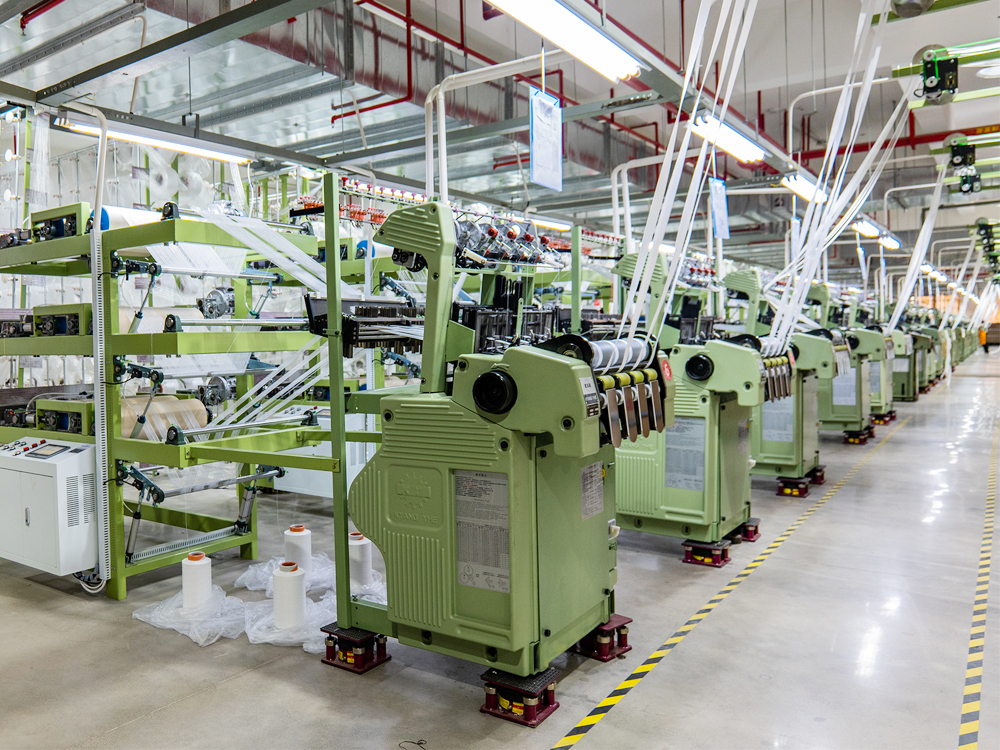
Color drift is the most common reason a bulk order is rejected at inspection. Control is achieved with an automated dyeing system that minimizes human error and high-grade colorimeters that hold color to Delta E < 1.0 across batches. Two supporting numbers belong in the same specification: color fastness ISO 105 Grade 4–5 and perspiration fastness Grade 4.

Step-by-Step: From Requirement List to Approved Bulk Order
- Write the functional requirement list before choosing a fiber. Typical outdoor requirements: UV resistance, water resistance, high strength, lightweight, water repellent, colorfastness, eco-friendly materials (including recycled yarn options), flexibility, soft hand feel, low stretch and temperature resistance, plus any optional properties the product needs.
- Fix the compliance requirement first. Decide whether the program needs Bluesign® System Partner status, GRS 4.0, OEKO-TEX Standard 100 Class I or a combination. A baby-contact stroller component and a general camping strap do not carry the same class.
- Lock the physical specification. Widths of 20/25/38/50 mm or 1/2", 1", 1.5", 2" with customization available, 1.20 mm thickness (customized), packaged at 50 meters per roll.
- Select the route against the requirement list. Polyester for general outdoor and leisure programs, nylon where strength-to-weight ratio and elasticity lead, RPET where recycled content must be documented, aramid where cut resistance and temperature resistance are the driver.
- Put the four numbers in the spec. Aging target in hours, water repellency grade, target weight per meter, and color tolerance expressed as Delta E.
- Approve a counter-sample. Bulk production must match the approved pre-production sample in color, hand-feel and texture. Anything not visible on the sample — edge finish, print placement, cut tolerance — should be added to the approval sheet before the purchase order is issued.
- Book pre-shipment functionality testing. UV resistance grade and water repellency are verified according to ISO standards before goods leave, inside a 100% quality check that covers durability testing, color consistency control and material inspection.
Use Cases: Matching the Route to the Product
Backpack webbing
Backpack straps, compression webbing and adjustment loops are visible, load-bearing and color-critical. Polyester and RPET both fit. Where low weight is part of the product story, a construction that runs 25% lighter than standard webbing is the lever to use; where the brand sells on sustainability, GRS-documented RPET keeps that claim defensible through a retail audit.
Camping webbing
Camping components must be used with supporting equipment such as hammocks, tents, hooks and anchors. That combination puts UV resistance and colorfastness ahead of raw tensile numbers, because the field failure mode is fading, stiffening and color shift — not a single overload event.
Tubular webbing and climbing webbing
Tubular webbing and climbing webbing sit inside the safety envelope: they must be used with parachutes, harness systems and connectors, so the construction, finishing and test standard all have to be declared rather than implied. For EU mountaineering slings and climbing webbing, EN 566 requires a minimum tensile strength of 22 kN, which is the figure a safety specification should be tested against.
Stroller webbing
Child-contact applications carry the tightest specification in the range: 100% high-tenacity polyester or nylon filament, rounded edges for infant skin protection, soft edge, smooth surface, child-safe finishing, more than 10,000 buckle cycles in fatigue tests, and OEKO-TEX Standard 100 Class I certification.
Dog webbing and pet accessories
Pet and dog webbing is a high-abrasion, high-frequency-of-use application where color fastness, water repellency and quick-drying behavior matter more than peak strength. Polyester-based routes with Grade 4 water repellency and a machine-washable finish without pilling or color bleeding are the practical fit.
Comparison Table: Polyester vs. Nylon vs. RPET vs. Aramid
The table below compares the four routes on the criteria a sourcing team is normally asked to defend in an internal review.
| Criterion | Polyester webbing | Nylon outdoor webbing | RPET / recycled webbing | Aramid webbing |
|---|---|---|---|---|
| Fiber basis | Woven polyester yarn | Woven nylon, including Nylon 6.6 webbing | Recycled polyester (RPET) yarn | High-performance aramid fiber |
| Market position | Dominant leisure material in the US, used in approximately 60% of leisure products (IMARC Group) | Fastest-growing webbing segment in sporting goods (IMARC Group) | rPET accounted for approximately 15–18% of global polyester fiber production in 2024 (Szoneier Fabrics / Textile Exchange) | High-performance route for cut-risk and heat-exposed applications |
| Why buyers choose it | Broadest certification coverage with stable UV and color behavior | High strength-to-weight ratio with elasticity | Documented recycled content for GRS claims | Cut resistance and temperature resistance |
| Certification routes | Bluesign® System Partner, GRS 4.0, OEKO-TEX Standard 100 Class I (Baby Safe) | OEKO-TEX Standard 100 Class I on child-contact constructions | GRS for recycled content; bluesign® System Partner status at manufacturer level | Confirm per construction |
| Typical applications | Backpack webbing, camping webbing, stroller webbing, general outdoor webbing | Load-bearing straps, pet and dog webbing, comfort-critical components | Eco-positioned collections and gear carrying GRS claims | Cut-resistant and aerospace webbing lines |
| First question to ask | Aging target in hours and color tolerance | Aging data on the exact construction | Recycled content documentation per batch | Construction-specific tensile test reports |
The second table lists the technical baseline that applies across the outdoor webbing range, so a buyer can compare quoted routes against one set of numbers.
| Specification | Verified baseline |
|---|---|
| Widths | 20/25/38/50 mm or 1/2", 1", 1.5", 2", customization available |
| Thickness | 1.20 mm (customized) |
| Packaging | 50 meters per roll |
| Color fastness | ISO 105 Grade 4–5 |
| Perspiration fastness | Grade 4 |
| UV resistance | Grade 4 (BS EN ISO 105-B02) |
| Water repellency | Grade 4 |
| Weight | Up to 25% lighter than standard webbing where the construction is engineered accordingly |
| Color tolerance | Delta E < 1.0, controlled through automated dyeing and high-grade colorimeters |
| Aging verification | Accelerated aging tests to an agreed lifespan, for example 500+ hours |
These figures describe the outdoor webbing range as a whole. Special constructions, including aramid, must be confirmed on their own datasheet and test report before approval — construction-specific tensile and aging data should never be carried over from a different build.
Sourcing Considerations That Differ Between the Routes
MOQ and trial orders
Customized designs carry a minimum order quantity of 3,000 meters. That threshold is the practical dividing line between the routes: a customized RPET build with a dedicated color and branded print is quoted at the 3,000-meter level, while standard constructions can be discussed at a lower commitment. Small-batch trial orders are supported for startup outdoor brands that need to validate a route before scaling.
Acceptance inspection
Acceptance is sample-anchored rather than spec-anchored. Bulk production must match the approved pre-production sample in color, hand-feel and texture — counter-sample matching — and before shipment, UV resistance grade and water repellency are verified according to ISO standards. Around that sits a 100% quality check covering durability testing, color consistency control, material inspection and compliance with outdoor and consumer product standards.
OEM and ODM scope
OEM and ODM programs cover design customization and branding, including customized widths and the 1.20 mm customized thickness, color development through the automated dyeing system, and branding through five-color screen printing. Where components are supplied cut to length or punched, they are approved the same way as uncut webbing: bulk must match the counter-sample in color, hand-feel and texture. Printing placement, edge finish and cut tolerance should be added to the counter-sample approval sheet so that acceptance is measurable rather than subjective.
Delivery and payment mechanics
Delivery terms are flexible across FOB, CIF, DAP and DDP, shipped by sea, air or express (FedEx/DHL/UPS) for urgent requirements. Payment terms are T/T with a 30% deposit and 70% before shipment, or a confirmed L/C at sight, with flexible terms available for long-term strategic partners.
Long-term supply and after-sales
Monthly production capacity is approximately 25,000,000 yards, which is the number that matters when a program scales across seasons or adds a second SKU family. After-sales support covers product consultation, customization support, fast feedback on quality issues and long-term cooperation support — the parts of a supplier relationship that determine whether a material decision can be repeated on the next program.
Frequently Asked Questions
Which certifications are available for polyester, RPET and nylon outdoor webbing?
Polyester webbing in this range holds Bluesign® System Partner, GRS 4.0 and OEKO-TEX Standard 100 Class I (Baby Safe) certification. The recycled route is supported by GRS documentation for recycled content, and the manufacturer is listed as a bluesign® System Partner. Child-contact constructions, such as stroller webbing made from 100% high-tenacity polyester or nylon filament, carry OEKO-TEX Standard 100 Class I certification. The applicable class depends on skin-contact type, so certification should be confirmed against the exact construction and end use.
What does OEM and ODM support cover for a webbing program?
OEM and ODM support covers design customization and branding: customized widths of 20/25/38/50 mm or 1/2", 1", 1.5", 2", customized 1.20 mm thickness, color development through an automated dyeing system holding Delta E < 1.0, and branding carried out on five-color screen printing machines. Packaging is 50 meters per roll. Where components are supplied cut to length or punched, bulk production is accepted against a counter-sample — it must match the approved pre-production sample in color, hand-feel and texture.
How does the material route change cost?
Material cost is only one line in the comparison. In this range, OEM pricing is competitive, shipping costs fall where a lighter construction is used — the range includes builds that are 25% lighter than standard webbing — and eco-conscious brands carry a premium value position on GRS-documented RPET rather than a cost penalty. On customized designs, the 3,000-meter MOQ is the quantity that pricing is quoted against, while small-batch trial orders are supported for startup outdoor brands. Delivery can be set as FOB, CIF, DAP or DDP by sea, air or express (FedEx/DHL/UPS), and payment is T/T with 30% deposit and 70% before shipment, or a confirmed L/C at sight.
Can a brand test a material route before committing to full production?
Yes. Small-batch trial orders are supported so startup outdoor brands can validate a route before scaling, and the reference point for approval is a counter-sample covering color, hand-feel and texture. Before shipment, UV resistance grade and water repellency are verified according to ISO standards as part of the functionality test. Brands can request a sample of a specific construction — polyester, nylon, RPET or aramid — together with current pricing for the target width, thickness and color before placing a bulk order.
What keeps supply stable over a multi-season program?
Capacity and terms, in that order. Monthly production capacity is approximately 25,000,000 yards, and every order runs a 100% quality check that includes durability testing, color consistency control, material inspection and compliance with outdoor and consumer product standards. After-sales support covers responsive customer service, product consultation, customization support, fast feedback on quality issues and long-term cooperation support, with flexible payment terms for long-term strategic partners. Sourcing teams evaluating a route for a multi-season program can request current lead times, a sample and pricing directly at judecam@judegroup.com.
Conclusion: Decide the Route on Evidence, Then Lock the Terms
Polyester, nylon, RPET and aramid are not competing answers to the same question; they answer four different requirement lists. Polyester webbing covers most outdoor and leisure programs with the broadest certification coverage — Bluesign® System Partner, GRS 4.0 and OEKO-TEX Standard 100 Class I. Nylon outdoor webbing takes over where strength-to-weight ratio and elasticity lead the specification. RPET webbing exists so that recycled content can be stated with GRS documentation behind it. Aramid webbing stays in cut-risk and heat-exposed designs, where construction-specific test data decides the approval.
Whichever route is selected, the same four numbers decide whether the decision survives contact with production: UV resistance verified by accelerated aging to an agreed lifespan such as 500+ hours, water repellency rated Grade 4, a construction up to 25% lighter than standard webbing where the build allows it, and color held at Delta E < 1.0 through automated dyeing and high-grade colorimeters. Around those numbers sit the terms that make the decision repeatable — a 3,000-meter MOQ for customized designs, trial orders for startup brands, counter-sample acceptance with ISO functionality tests, and OEM and ODM support covering design customization, branding, customized widths and thicknesses, and packaging at 50 meters per roll.
Next Step: Request a Sample, Quote or Catalog
JUDECAM supplies polyester, nylon outdoor, RPET, recycled and aramid webbing with Bluesign® System Partner status, GRS 4.0 and OEKO-TEX Standard 100 Class I certification, and runs every order against counter-sample acceptance and pre-shipment functionality testing.
Email: judecam@judegroup.com | Tel: 86-592-6361058 | WhatsApp: +86 13358399583
Website: www.judewebbing.com | Blog: blog.judewebbing.com
Address: No. 601 ShiXing Road, Jimei District, Xiamen, 361024, China
Send your target width, thickness, color reference and end-use application, and the team will confirm the recommended material route, the accelerated aging target, and current MOQ and lead time.
Have Questions or Need More Details?
Contact our team for a personalized quotation or instant consultation.
Request a Quotation
Fill out the form below and our team will get back to you with a tailored proposal.
WhatsApp Direct Chat
Prefer to chat in real-time? Message us on WhatsApp for instant assistance & quick answers.
- Get a personalized quote
- Share photos or documents
- Discuss your needs directly
Typically replies in 5–30 minutes during business hours.