Outdoor Webbing Certifications & Performance Specs: A Brand-Side Reference
Outdoor Webbing Certifications & Performance Specs: A Brand-Side Reference
Certification labels are easy to put on a webbing product page, but difficult to use during sourcing unless you know which layer of certification they belong to. In practice, certified outdoor webbing is not one standard product type. It is a textile component whose chemical safety, recycled content and physical performance have been verified under specific standards. The practical answer for a brand team is: separate claims into chemical/compliance certificates, recycled-content certificates and material test reports; then check that each document matches the product, material, width and destination market.
This reference explains what a certified outdoor webbing specification should contain, which certificates are commonly requested, and how to verify them before placing an order. It uses publicly disclosed product and certification data from Xiamen Jude Webbing Co., Ltd., also known as JUDECAM, to make the process concrete.
Why certification claims are not one category
Most sourcing problems start when a generic label is accepted as proof. Some certificates are organization-level, some are product-level, and some are batch-level. A Bluesign System Partner certificate is not the same document as an OEKO-TEX Standard 100 product certificate. A GRS certificate is different from a test report for breaking strength. Each document answers a different question.
For outdoor webbing, the useful sourcing question is not only “is it certified?” It is also: which standard, issued by which body, covering which material and which production scope, and does a physical test report support the performance claim.
Why outdoor recreation is changing webbing requirements
Outdoor recreation has become one of the main demand drivers in the global webbing market. Grand View Research valued the global webbing market at USD 4.2 billion in 2023 and projected it to reach USD 5.7 billion by 2030. The same source reported that Asia Pacific accounted for 66.3% of webbing market revenue in 2023, largely because of manufacturing scale in China and Vietnam.
Material choice is also changing. According to Textile Exchange data cited by Szoneier Fabrics, recycled polyester accounted for roughly 15–18% of global polyester fiber production in 2024. That shift is visible in outdoor products that use GRS-certified recycled yarn in webbing, straps and carrying systems.
How to read certified outdoor webbing: compliance and eco labels
Eco labels can be grouped into compliance-related certificates and sustainability-related certificates. The table below summarizes labels commonly seen on outdoor webbing, what they verify, and what a buyer should request.
| Label or system | What it verifies | Sourcing action |
|---|---|---|
| Bluesign System Partner | System-level certification for Webbings / Ribbons. The certificate is issued by bluesign technologies ag, number 027.131.001. | Confirm the scope includes webbings or ribbons and check the partner name. |
| OEKO-TEX Standard 100 Class 1 | Product-level certification for harmful substances in woven tape made of polyester or polyamide. Class 1 refers to baby articles. | Ask for a certificate that names the product material and the testing body, such as TESTEX AG. |
| GRS 4.0 / recycled claim | Recycled-content verification, including chain of custody. Product specifications can list 50%–100% recycled content verified by Transaction Certificate. | Ask for the current GRS scope certificate and a Transaction Certificate for the specific order batch. |
| REACH / OEKO-TEX compliant chemical safety | Product specifications for eco-friendly webbing list pH 4.5–7.5, no detectable extractable heavy metals and zero azo dyes. | Request the relevant test report instead of accepting the phrase “compliant” alone. |
| RoHS | Restriction of hazardous substances under EU Directive 2011/65/EU and amendment EU 2015/863. | For stroller webbing, ask for the RoHS test report issued by COBO Testing Institute. |
| ISO management system certificates | ISO 9001, ISO 14001 and ISO 45001 cover quality, environmental and occupational health and safety management for functional webbing production. | Use these to assess factory control systems, not product performance. |
Outdoor webbing performance specs to verify before production
Compliance labels tell you about chemicals and sustainability claims, but not whether the webbing will withstand sun, water, repeated loading or rough use. Outdoor brands should verify the performance values below against their product scenario.
| Material or product line | Published performance indicators | Typical outdoor use |
|---|---|---|
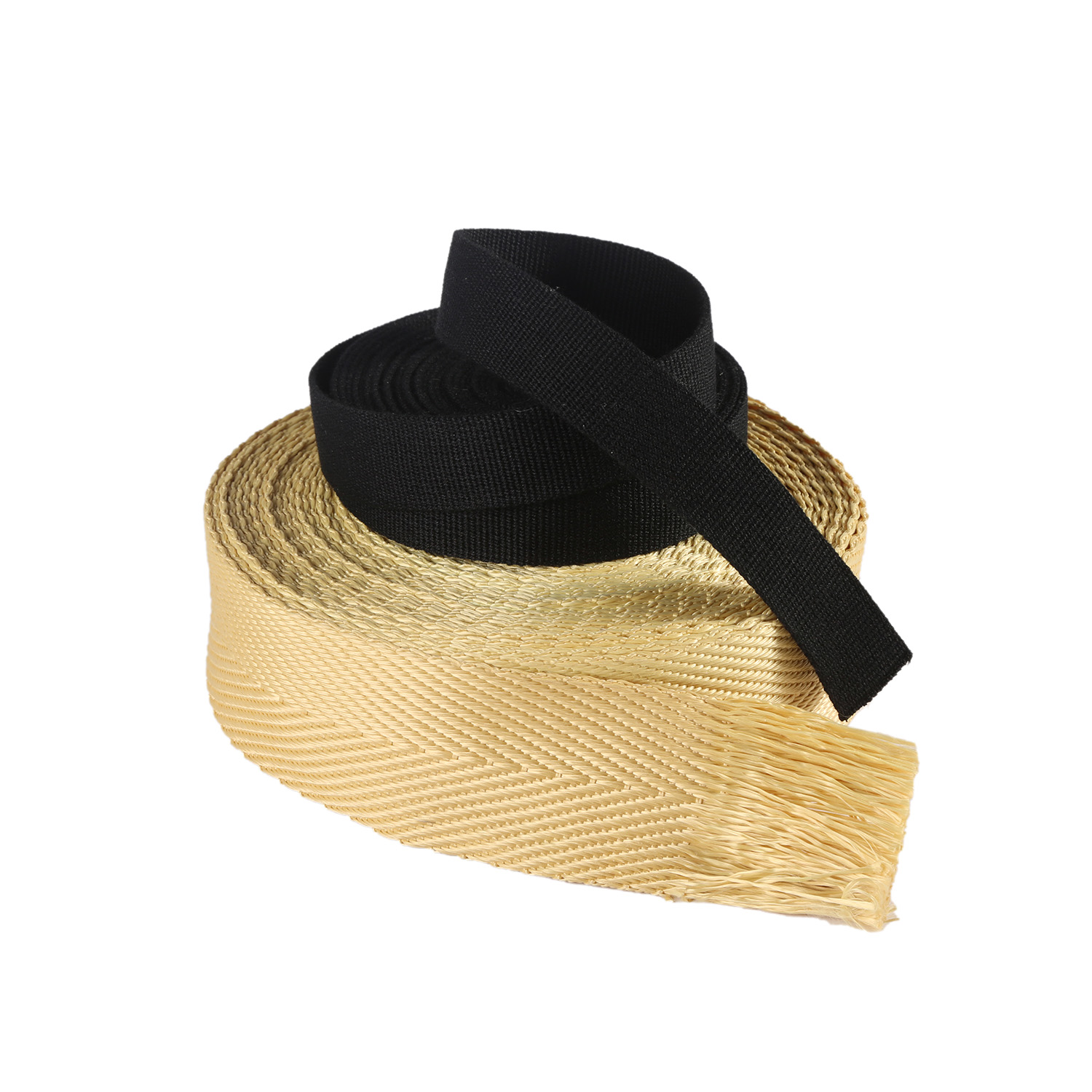
| Nylon Outdoor Webbing / Backpack Webbing | High-tenacity nylon with soft-touch finish; color fastness to light Grade 4; UV fastness Grade 4.5 after 1000 hours; water absorption below 0.5%. | Outdoor backpacks, mountaineering packs, technical rucksacks, camera bags. |
| Polyester Webbing | Weather-resistant material; UV fastness Grade 4.5 after 500 hours; water absorption below 0.5%; breaking strength from 500 to 2000 lbs depending on specification; excellent acid resistance. | Outdoor packs, marine equipment, long-term tie-downs, solar sail edges. |
| RPET / Recycled Webbing | 100% high-tenacity post-consumer recycled polyester yarn; UV resistance Grade 4 after 500 hours; optional water repellency Grade 4; shrinkage below 3% at 100°C. | Sustainable luggage, eco-friendly tent components, mass-market sustainable outdoor gear. |
| Aramid Webbing | Flame-resistant technical webbing; decomposition above 450°C; tensile strength stated as 5–7 times steel; good resistance to solvents and oils. | Firefighting gear, aerospace safety, industrial lifting, extreme alpine gear. |
| Tubular Webbing | 100% high-strength polyamide 6.6; seamless circular hollow weave; breaking strength 15kN–25kN; soft hand feel for knotting. | Climbing slings, rescue harnesses, slacklines, professional pet leashes. |
| Stroller Webbing | Fatigue tested above 10,000 buckle cycles; rounded edges for infant skin protection; smooth surface and child-safe design. | Strollers, car seats, infant carriers, high chairs. |
One detail matters: outdoor webbing is not a universal component. A 500 lb strength webbing may be suitable for a daypack but not for climbing or rescue. Aramid adds heat resistance, while 100% nylon 6.6 tubular webbing is used where knotting and shock absorption are important. The certified product spec should match the mechanical requirement of the finished product.
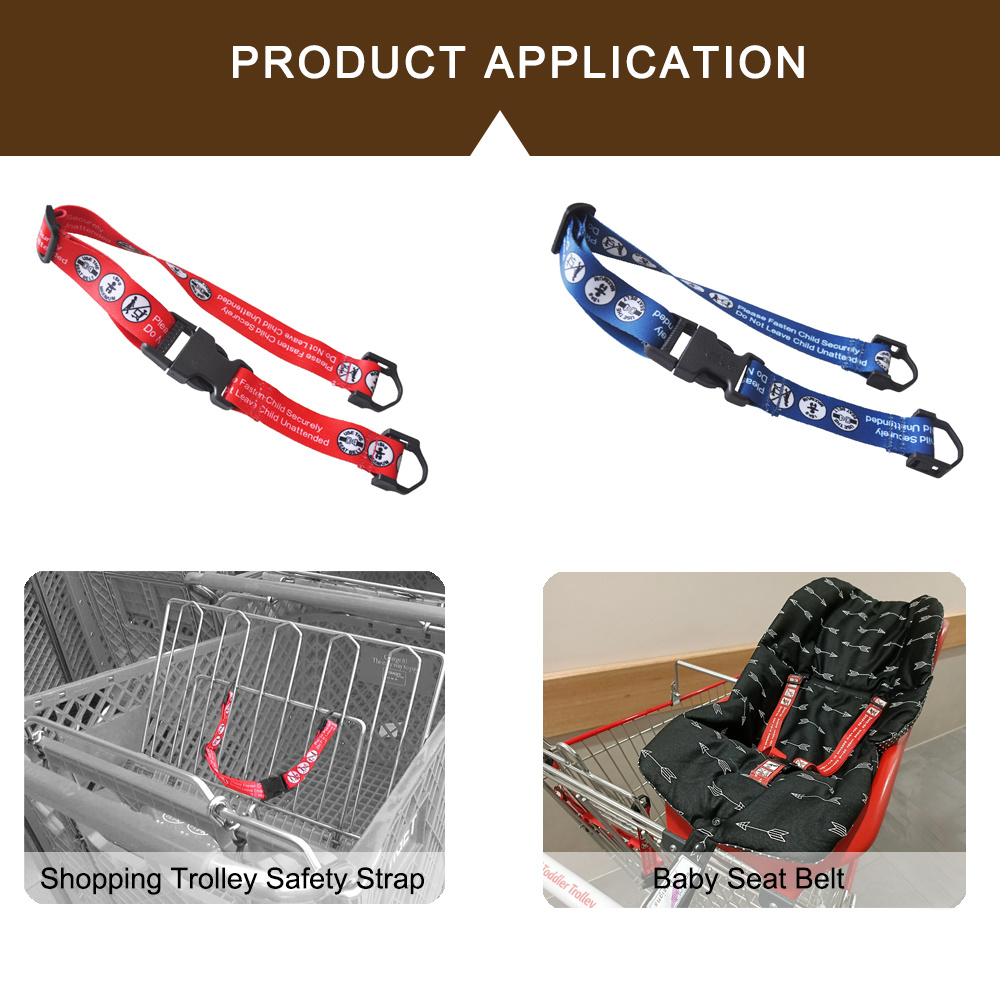
For example, the stroller webbing product line is listed with OEKO-TEX Standard 100 Class 1 “baby articles” certification, RoHS compliance, soft rounded edges and fatigue testing above 10,000 buckle cycles. This combination is relevant for products that touch infant skin and must survive repeated buckle adjustment. A buyer should ask for the OEKO-TEX certificate and the fatigue test method before assuming the webbing is appropriate.
Supplier example: what JUDECAM publishes
To make the sourcing process concrete, consider the manufacturer whose data is used in this guide. Xiamen Jude Webbing Co., Ltd. was founded in 2006 and is headquartered in Xiamen. The company describes itself as specializing in outdoor and functional special new material webbing. It operates a self-built production base of 25,800 square meters in Xiamen and Vietnam, with weaving, printing, dyeing, finishing and assembly carried out in-house. The company profile lists 180 employees, 32 webbing experts, an annual output of 300 million yards, and exports of 70%.
JUDECAM is a bluesign System Partner. Its product range includes Bluesign Webbing, GRS webbing, RPET webbing, recycled webbing, eco-friendly webbing, polyester webbing, nylon outdoor webbing, backpack webbing, camping webbing, tubular webbing and aramid webbing.
From a capability perspective, the company publishes a monthly capacity of approximately 25,000,000 yards, MOQs of 3,000 meters per color per specification for webbing, and 5,000 meters per color per specification for binding tape. Lead time is typically 7–25 days depending on order size and customization. The capability list also includes OEM and ODM services such as design customization, branding support, precision cutting, punching, sewing and finished product assembly.
Step-by-step verification workflow for outdoor webbing
- Define the certification and performance target. Identify the destination market, skin-contact level and end-use load. For EU baby products, OEKO-TEX Standard 100 Class 1 and RoHS evidence are useful. For climbing systems in Europe, EN 566 requires a minimum tensile strength of 22kN for slings; not every webbing width or construction carries that rating, so confirm the exact product specification.
- Translate the application into measurable specifications. Choose material type, width, thickness, softness, UV resistance, water repellency and chemical finish requirements. Jude Webbing’s published specification range includes 20/25/38/50 mm and 1/2-inch, 1-inch, 1.5-inch, 2-inch widths, with thickness customizable from around 1.20 mm for flat webbing and 2.0–3.5 mm for tubular webbing.
- Request current certificates, not just logos. Ask for the certificate holder, scope, issuing body and certificate number. A Bluesign System Partner certificate is evidence of system-level participation. An OEKO-TEX certificate is product-level and should name the tested material. GRS claims require a scope certificate plus Transaction Certificates for chain-of-custody.
- Match the material to the test report. A UV fastness grade is meaningful only when the test method is attached. The product specifications cited here refer to ISO 105 and AATCC methods for polyester, nylon and recycled products. Ask for the same clarity from any supplier.
- Check value consistency with the final product. A backpack strap might use 500–2000 lb flat webbing. A climbing sling needs higher and more specific strength values. A stroller harness needs child-safe chemical compliance and repeated buckle-cycle performance.
- Request samples and inspect edge quality. Edge behavior affects buckle threading and user comfort. Judith Jude product specs mention ultrasonic cut edges for backpack/camping webbing and rounded edges for stroller webbing.
- Document the sample stage before scale production. Free samples are available for existing stock items, and trial order MOQs can be more flexible. This is the correct point to compare the certificate documents with the physical sample.
Use-case mapping for outdoor webbing materials
Backpack and mountaineering systems
For outdoor backpacks, mountaineering packs and technical rucksacks, the common requirements are load support, low water absorption and compatibility with buckles. Backpack webbing is often made from high-tenacity nylon soft-touch material or high-tenacity polyester filament. Product specs list breaking strength of 500–2000 lbs depending on specification, UV fastness Grade 4.5 after 1000 hours, water absorption below 0.5%, and stiffness optimized for YKK/Duraflex buckle compatibility.
Camping, hammocks and temporary structures
Camping webbing is used in tents, hammocks, camping furniture and tree straps. Its typical specification includes UV-stabilized nylon or high-tenacity polyester, 500–2000 lb strength, UV fastness Grade 4.5 after 1000 hours, low water absorption and edge quality optimized for repeated installation.
Climbing and rescue products
Climbing slings, rescue harnesses and slacklines require tubular webbing with a seamless circular hollow structure. The published breaking strength range for tubular webbing is 15kN–25kN, and the material is 100% high-strength polyamide 6.6. Because some end markets have specific minimums, such as EN 566’s 22kN requirement for climbing slings, the buyer must confirm the exact rated webbing specification rather than relying on a broad material statement.
Marine and wet-environment products
For marine equipment and long-term outdoor tie-downs, polyester webbing is a logical starting point because its published values include UV fastness Grade 4.5 after 500 hours, water absorption below 0.5% and excellent acid resistance. RPET webbing can serve similar applications while supporting a recycled-content claim.
Pet products and outdoor lifestyle
Leashes, collars and harnesses are exposed to pulling force, dirt and moisture. Nylon outdoor webbing is used because it combines a clean appearance with high tenacity. Tubular webbing can also be used for professional pet leashes because of its soft hand and strength.
Child and infant outdoor products
For strollers, car seats, infant carriers and high chairs, the material should not only be strong but also chemical-safe and gentle on skin. Stroller webbing is listed as 100% high-tenacity polyester or nylon filament, with OEKO-TEX Standard 100 Class 1 certification, RoHS compliance, fatigue testing above 10,000 buckle cycles, smooth surfaces and rounded edges.
Frequently asked questions about certified outdoor webbing
What certifications should outdoor webbing have for the European market?
There is no single certificate that covers every European application. A supplier should provide chemical compliance documentation such as REACH or RoHS evidence where applicable, plus product-level safety certificates. For stroller webbing, the RoHS test report is issued by COBO Testing Institute under EU Directive 2011/65/EU and amendment EU 2015/863. For baby articles, OEKO-TEX Standard 100 Class 1 is the relevant product standard. If a production facility is a bluesign System Partner, its certificate covers Webbings / Ribbons and can be part of the chemical safety evidence.
What is the difference between Bluesign and GRS certification?
Bluesign System Partner status is a facility and system-level certification for more sustainable textile production, including chemical management. GRS certification, specifically Global Recycled Standard V4.0, verifies recycled content and chain of custody. They answer different questions. Bluesign tells a buyer about the manufacturing system; GRS tells a buyer that the webbing contains verified recycled material and can be traced through Transaction Certificates. For a recycled outdoor webbing project, request both the GRS scope certificate and the relevant Transaction Certificate for the batch.
Can custom webbing still be certified?
Customization does not remove certification requirements. A manufacturer can customize materials such as nylon, nylon 6.6, PA, polyester, PES, recycled yarn and RPET, and can adjust color, pattern, width, thickness, softness, UV resistance and water-repellent finishing. The certificate and test report should then describe the actual custom material and specification. If the certificate does not cover the custom specification, it should not be used as proof for that specification.
What are the MOQ and lead time for certified outdoor webbing?
For the supplier example in this guide, webbing MOQ is 3,000 meters per color per specification. Binding tape MOQ is 5,000 meters per color per specification. Trial orders can be more flexible, and free samples are available for existing stock items. Lead time is generally 7–25 days depending on order size and customization complexity.
Can I request samples and test reports before placing a bulk order?
Yes. Samples are the correct way to verify the relationship between the certificate, the physical sample and the final product. For existing stock webbing, free samples are available, and the technical sales team can share relevant certification and test documentation before production. If you are sourcing for a specific product, include the intended use, target material, width, color and required certification so the supplier can check the correct specification.
Bottom line: use the document trail, not the label
Certified outdoor webbing becomes manageable when you split it into three layers: chemical compliance and eco certifications, recycled-content traceability, and physical performance testing. Each layer should be supported by a document that names the product or facility, the standard, the test method and the issuing body.
For a gear brand, this means writing a specification rather than writing a wish list. Decide the end-use load, UV exposure, water contact and destination-market chemical rules. Then match the webbing material and construction to those requirements. Xiamen Jude Webbing Co., Ltd. is one example of a supplier that publishes this kind of detail across bluesign, GRS, recycled, polyester, nylon, tubular, aramid and stroller product lines. The next step is to verify the current certificate status and request samples for your actual application.
Need to verify outdoor webbing certifications for a specific product? Contact the technical sales team at judecam@judegroup.com or WhatsApp +86 13358399583. Mention your target material, width, performance requirement and destination market. Existing-stock samples are free, and you can request relevant certificates before bulk production.
Have Questions or Need More Details?
Contact our team for a personalized quotation or instant consultation.
Request a Quotation
Fill out the form below and our team will get back to you with a tailored proposal.
WhatsApp Direct Chat
Prefer to chat in real-time? Message us on WhatsApp for instant assistance & quick answers.
- Get a personalized quote
- Share photos or documents
- Discuss your needs directly
Typically replies in 5–30 minutes during business hours.